Fix Real Estate Lead Conversion: 2026 Strategy Guide
Aug 28, 2026
Written by Discount Property Investor Team
You spent $3,000 on direct mail, digital pay-per-click, and cold outbound marketing over the past 30 days. Your CRM logged 85 inbound inquiries. You dialed 60 of them, had 18 preliminary conversations, ran numbers on 10 properties, and sent out 6 written cash offers.
Signed contracts? Exactly zero.
When deals dry up, the default reaction for most real estate investors is to blame lead generation. You assume you need a cleaner list, more ad spend, or a different ZIP code. But in the vast majority of operations, lead generation is not the bottleneck—lead conversion is.
The U.S. housing market of late summer 2026 is structurally different from the frenzied, hyper-liquid environments of recent memory. If you are operating with an acquisition model that worked when inventory was locked down, and debt was negligible, your leads are not failing you. Your pipeline mechanics, underwriting velocity, and follow-up architecture are simply misaligned with current economic realities.
What Is Actually Happening in the Real Estate Market Right Now
To understand why motivated sellers are hesitating and wholesale buyers are renegotiating, you have to look directly at the structural forces moving through the U.S. housing ecosystem.
According to data published by
At the same time, transaction volume reflects an ongoing standoff between buyers and sellers. The
GRAPH 1: Primary Market Trend — U.S. Existing-Home Sales Volume vs. 30-Year Mortgage Rate (2026)
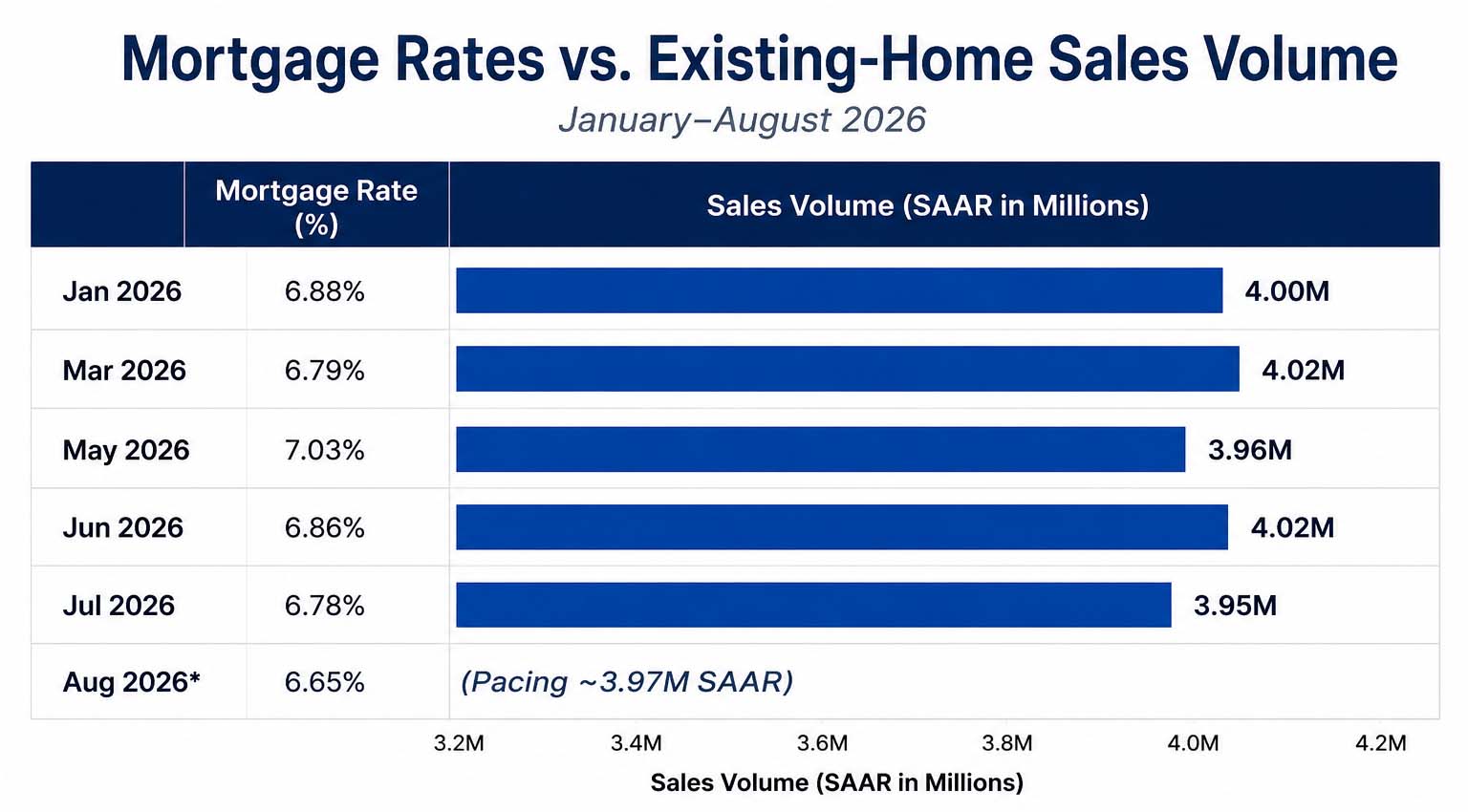
Graph 1 Interpretation & Investor Takeaway: Graph 1 highlights the tight negative correlation between borrowing costs and transaction liquidity. When rates hover in the mid-to-high 6% range, retail transaction velocity locks up.
Source: National Association of REALTORS® (NAR) & Freddie Mac (Published August 2026)
For the real estate investor, this creates two distinct conversion friction points:
-
The Retail Seller Anchor: Sellers look at record national median prices ($434,100) and anchoring headlines, expecting peak retail pricing for properties that require significant deferred maintenance.
-
The End-Buyer Margin Compression: Your disposition buyers (landlords and retail fix-and-flippers) face high carrying costs. If you pass along wholesale contracts with thin margins, end buyers will cancel during inspection periods or walk away entirely.
The Market Mechanics Behind Deal Disconnection
Why does an influx of raw seller leads fail to turn into signed purchase contracts? Three underlying market dynamics explain the friction.
1. The Disappearance of the Entry-Level Buyer Floor
According to
When first-time retail buyers cannot qualify for conventional mortgages due to strict debt-to-income (DTI) caps, the entry-level starter home market stagnates. For fix-and-flip investors and wholesalers assigning deals to rehabbers, your disposition exit is no longer guaranteed by a line of eager retail buyers willing to waive appraisals. Flippers are demanding wider margins—often 70% of After Repair Value (ARV) minus repairs, rather than the aggressive 80–85% formulas seen during lower-rate cycles. If your acquisition team is calculating Maximum Allowable Offers (MAO) using outdated spreads, your offers will either be rejected by sellers or abandoned by your buyers.
2. Rising Price Reductions vs. Seller Delusion
According to
While price reductions are growing, sellers are rarely ready to capitulate on day one. A homeowner who submits an online inquiry today often expects a top-of-market valuation. When you present an as-is investor offer, their immediate reaction is shock. Without a systematic, multi-touch follow-up engine that nurtures that seller over 30 to 90 days as their listing sits or their holding costs mount, that lead simply goes cold.
3. Builder Incentives and Regional Supply Disparities
National housing averages conceal significant divergence across regional submarkets. In high-growth Sun Belt markets, homebuilders have aggressively utilized mortgage rate buydowns (often subsidizing notes down to the 4.99%–5.5% range) and price concessions, putting immense pressure on existing-home sellers and flippers.
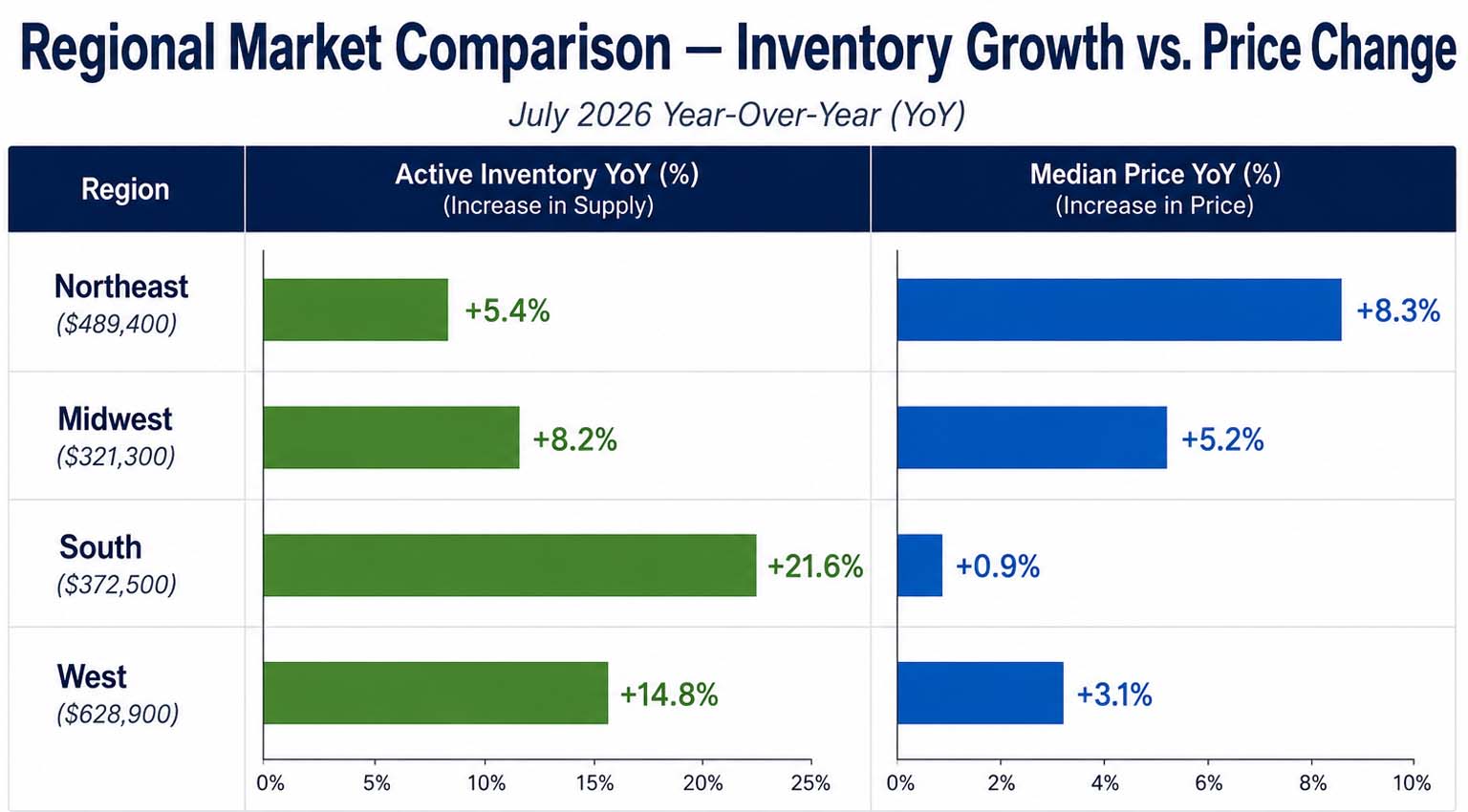
Graph 2 Interpretation & Investor Takeaway: In the Northeast and Midwest, active inventory remains tight, keeping price growth strong (+8.3% and +5.2% YoY, respectively). In these markets, the challenge is finding distress; sellers still command strong retail attention.
Source: NAR Housing Data & Realtor.com Housing Trends (Published August 2026)
Conversely, the South (+21.6% YoY active inventory) and parts of the West (+14.8% YoY) are seeing rapid supply accumulation. In high-inventory markets, tired landlords, code violation leads, and expired listings have substantially higher motivation—but your purchase price must be conservative to account for flattening prices and longer days on market (DOM).
Macro Indicators and Their Operational Impact on Deals
To maintain consistent deal flow, your acquisition underwriting must track real-time macro indicators.
Key U.S. Market Indicators & Investor Pipeline Impact (August 2026)
| Market Metric | Previous Baseline | Latest 2026 Data | Directional Change | Direct Investor & Pipeline Impact |
|---|---|---|---|---|
|
30-Year Fixed Mortgage Rate |
6.78% (July 2026 Avg) |
6.65% (Week ending Aug 20, 2026) |
-13 bps (Declining) |
Lower borrowing costs slightly ease buyer qualification, but debt remains double 2021 levels. Underwrite strict debt service coverage ratios (DSCR) for rental exits. |
|
National Existing-Home Sales |
4.02M SAAR (June 2026) |
3.95M SAAR (July 2026) |
-1.7% MoM |
Retail liquidity remains constrained. Expect wholesale assignment buyer pools to be selective; pre-screen end-buyer criteria weekly. |
|
Unsold Inventory Supply |
3.6 Months (July 2025) |
4.0 Months (July 2026) |
+0.4 Months YoY |
Approaching a balanced 4-to-6-month market. Seller leverage is diminishing, creating stronger terms for creative financing and seller-paid concessions. |
|
Median Existing-Home Price |
$422,400 (July 2025) |
$434,100 (July 2026) |
+2.8% YoY |
Retail prices remain elevated despite volume contraction. Investors must use hyper-local closed comps from the last 60 days, avoiding active listing prices as ARV benchmarks. |
|
Active Listings with Price Cuts |
18.8% (June 2026) |
20.0% (July 2026) |
+1.2% MoM |
1 in 5 sellers is actively reducing prices. Target price-cut properties that have been on the market for>45 days for creative finance (Subject-To/Seller Carry) offers. |
|
First-Time Homebuyer Share |
30% (July 2025) |
29% (July 2026) |
-1.0% YoY |
A smaller first-time buyer pool can reduce exit liquidity for entry-level properties. Investors should stress-test resale assumptions and prioritize affordability when selecting deals. |
Diagnosing Lead Leakage: The 5-Point Pipeline Audit
If your marketing pipeline produces inquiries but fails to deliver executed contracts, you must systematically audit the five leak points in your conversion funnel.
-
Speed-to-Lead Decay: According to sales velocity analytics published by REI Reply, responding to an inbound seller inquiry within 60 seconds increases live engagement probability by over 390% compared to waiting 30 minutes. When a motivated seller reaches out, they are experiencing peak urgency. A multi-hour delay allows competing investors to step in.
-
Price-First Interrogation vs. Diagnostic Discovery: Inexperienced reps often open calls with transactional questions about price. Focusing on price immediately commoditizes your service and triggers seller defenses. High-converting operators prioritize discovery: uncovering timelines, moving pressures, and the emotional cost of holding the property.
-
One-Dimensional Cash Underwriting: Offering only standard discount cash bids (e.g., 65–70% of ARV minus repairs) automatically disqualifies roughly 90% of incoming leads. Mastering creative deal structures—such as Subject-To, Novation Agreements, or Seller Financing—allows you to convert leads with lower equity or low-rate underlying debt.
-
Premature Follow-Up Abandonment: Data from SwiftLeads AI's 2026 Conversion Benchmarks indicates that over 70% of off-market real estate contracts close between the 5th and 12th contact attempt. Yet, the average investor stops follow-up after just 2 to 3 attempts.
-
Weak Dispositions and Misaligned Buyer Criteria: A locked contract produces zero revenue if your disposition desk cannot clear the assignment. If end buyers require wider margins due to elevated financing and insurance costs, acquisition criteria must adjust immediately to match active buyer parameters.
Strategy by Experience Level
Practical Guidance for Beginners
-
Master High-Intent Distressed Lists: Focus marketing budgets on high-urgency triggers (Pre-Foreclosures, Tax Delinquencies, Code Violations, and Probates) rather than broad, unfocused campaigns.
-
Learn Novation Agreements: For properties in reasonable condition that require only light cosmetic updates, utilize novations to list on the MLS and access retail buyer pools.
-
Prioritize Immediate Response: Set automated phone notifications to contact leads within three minutes of submission, followed immediately by a personalized SMS if unanswered.
-
Address Valuation Expectations Constructively: When sellers cite automated retail home estimates, validate their perspective while explaining the trade-offs between open-market listing costs and an as-is, guaranteed cash sale.
Strategic Adjustments for Seasoned Operators
-
Monitor Conversion KPIs Weekly: Track Cost Per Acquisition (CPA), Speed-to-Lead by representative, and Lead-to-Contract ratios across every inbound channel.
-
Stress-Test Exit Underwriting: In inventory-heavy markets across the South and West, model extended holding periods (120 to 150 days) and include a 5% price contingency buffer in your baseline ARV.
-
Deploy Database Reactivation Campaigns: Allocate dedicated operational time to re-engage unconverted leads from 90 to 180 days ago through structured, personalized outreach workflows.
The Step-by-Step Lead Conversion Framework
Implement this four-phase operational model to transform cold inquiries into executed contracts:
Phase 1: Rapid Inbound Response Protocol (First 5 Minutes)
-
Minute 0–1: Direct voice call from your acquisition representative or answering desk.
-
Minute 2: If unanswered, send an immediate SMS:
"Hi [First Name], this is [Your Name] with [Company]. I just received your property details for [Street Address] and am reviewing neighborhood comps now. Are you looking to sell immediately, or is your timeline flexible?"
-
Minute 5: Send an introductory email with credential documentation, verified proof of funds, and past project examples.
Phase 2: The 4-Pillar Discovery Call
-
1. Real Motivation: "Besides getting the property sold, what is the most important outcome for you and your family right now?"
-
2. Firm Timeline: "If we agree on acceptable price and terms, how quickly would you ideally like to close and have funds distributed?"
-
3. Property Reality: "If you were bringing the home to full retail market condition, what major repairs or updates would an inspector note?"
-
4. Equity & Debt Architecture: "To help us structure the best options, do you currently have an outstanding mortgage balance, or is the property owned free and clear?"
Phase 3: The Multi-Option Offer Presentation
-
Option A: As-Is Cash Buyout: Fast 14-day close, zero seller repairs, no commissions, buyer covers closing costs (underwritten at 68–72% of ARV minus repairs).
-
Option B: Creative Financing / Seller Carry: Higher net price approaching 85–90% of market value, structured via an installment sale, Subject-To, or note terms.
-
Option C: Novation / Listing Partnership: Provide capital for cosmetic updates, market to retail buyers on the MLS, and protect a guaranteed net price floor for the owner.
Phase 4: The 60-Day Nurture Protocol
-
Week 1 (Every 48 Hours): Alternate between short phone calls and local market updates.
-
Weeks 2–4 (Twice Weekly): Check in regarding moving logistics, estate timelines, or general progress.
-
Weeks 5–8 (Weekly): Re-engage on market pricing adjustments:
"Hi [First Name], I noticed a nearby home on [Street Name] recently adjusted its asking price. Are you still open to reviewing cash or terms options for [Street Address], or has your timeline changed?"
Your 7-Day Implementation Action Plan
-
Day 1: Audit Pipeline Metrics: Review your last 50 leads to calculate your exact speed-to-lead, contact rate, offer rate, and touches per lead.
-
Day 2: Recalibrate Underwriting Formulas: Update Maximum Allowable Offer models to match current 6.65% mortgage rates and local supply dynamics.
-
Day 3: Deploy Speed-to-Lead Automation: Configure CRM alerts and automated SMS responses to engage incoming leads in under 60 seconds.
-
Day 4: Role-Play Discovery Scripts: Practice the 4-Pillar Discovery framework to improve objection handling and rapport building.
-
Day 5: Standardize Multi-Option Offers: Build proposal templates that present Cash, Terms, and Novation choices side-by-side.
-
Day 6: Launch Database Reactivation: Deploy a direct check-in campaign to all inactive leads from the past 90 days.
-
Day 7: Establish Weekly KPI Tracking: Schedule a recurring operational meeting to review lead conversion ratios, disposition feedback, and acquisition metrics.
Essential Real Estate Coaching Takeaways
-
Lead Generation Does Not Equal Revenue: Scaling ad spend into a leaking conversion funnel only inflates your cost per deal. Master speed-to-lead and follow-up before increasing marketing volume.
-
Underwrite for Current Market Realities: With mortgage rates near 6.65% and inventory supply reaching 4.0 months nationally, base all offer valuations on recent closed comps rather than aspirational list prices.
-
Consistency in Follow-Up Drives Conversion: Over 70% of contracts materialize between the 5th and 12th contact. Build automated follow-up sequences to capture long-term pipeline value.
-
Expand Beyond Single-Cash Offers: Incorporating creative financing and novation strategies ensures you can monetize leads that cannot accept steep cash discounts.
Accelerate Your Investing Business
Scaling a predictable acquisition pipeline requires steady execution, data-backed underwriting, and disciplined follow-up systems. Review your conversion numbers, apply the 4-Pillar framework to your upcoming calls, align your purchase offers with current regional conditions, and track your closed contracts over the next 30 days.
Conclusion: Transforming Market Friction into Deal Velocity
Fixing your real estate conversion rate in 2026 is not about generating more leads; it is about eliminating operational friction and aligning with market reality. When mortgage rates hover near 6.65% and active listings with price cuts reach 20%, motivated sellers require consultative guidance, not transactional lowball offers.
If you respond to inquiries in under 60 seconds, structure conversations around real motivation rather than purchase price, offer multi-tier solutions (Cash, Terms, Novations), and maintain a consistent 5-to-12-touch follow-up system, your pipeline will naturally begin converting at industry-benchmark levels.
Take the 4-Pillar framework into your next call, stress-test your Maximum Allowable Offers against current local supply, and audit your conversion numbers weekly.
Need to Sell Fast? Skip the Listing Process With House Sold Easy
Everything above assumes you have the time and flexibility to price strategically, refresh photos, wait through a showing cycle, and negotiate concessions — and for most sellers, that's still the right approach. But if reading through all of this makes a traditional listing sound like more time, uncertainty, and price-cutting than you're willing to take on, there's another path.
At House Sold Easy, we buy houses directly for cash — no listing, no showings, and no waiting on a buyer's mortgage financing to come through in a market where rates are still hovering near 6.67%. That matters right now: with over 100,000 listings carrying price cuts in a given week and homes taking longer to find a buyer, a traditional sale can mean weeks of open houses and negotiation before you even get to a closing date. We make a fair cash offer, work around your timeline, and can close in as little as a few days — as-is, with no repairs to make and no agent commissions to pay.
Whether you're facing a tight deadline, handling an inherited property, or you'd simply rather not navigate today's slower, more negotiation-heavy market, get a no-obligation cash offer from House Sold Easy and see what a simpler sale looks like.
The lesson isn't that the sellers "lost" $16,000 off their original ask. It's that the original ask was never realistic, and recognizing that early — rather than after two more months of an empty calendar — is what got the home sold.