Real Estate Lead Follow-Up: Convert Sellers in 2026
Aug 31, 2026
Written by Discount Property Investor Team
You pull a targeted list of 500 off-market seller leads. You dial 200 of them. You get 12 conversations, run the numbers, and submit 3 competitive cash offers.
Then comes total silence. Zero signed contracts.
If that operational wall feels familiar, you are not alone—and it is not necessarily an issue with your marketing channels or your underwriting formulas. The primary bottleneck for most real estate investors in late 2026 is operational friction in lead conversion: applying single-touch, 2021-style acquisition tactics to a fundamentally transformed housing landscape.
In the August 2026 market, securing an off-market contract requires 5 to 12 meaningful, multi-channel touches, initiated within seconds of lead capture. The era of the simple "one-call close" on discounted properties has passed.
If you want to scale your contract volume without doubling your marketing budget, your follow-up cadence is where the battle is won.
What Is Happening in the August 2026 Housing Market?
To fix your lead conversion pipeline, you must understand the macroeconomic forces driving seller hesitation and buyer behavior right now.
Sellers in mid-2026 are caught between memories of peak equity and the realities of an increasingly balanced marketplace. Meanwhile, end-buyers—whether owner-occupants, retail buyers, or institutional landlords—face persistent affordability and debt constraints.
1. Persistent Financing Costs
According to Freddie Mac's Primary Mortgage Market Survey published August 20, 2026, the 30-year fixed-rate mortgage averaged 6.65% for the week ending August 20, 2026. While down slightly from peaks earlier in the year, borrowing costs remain elevated enough to compress retail buying power and raise holding costs for fix-and-flip operators.
2. Slower Transaction Velocity
The National Association of REALTORS® July 2026 Existing-Home Sales Report published August 11, 2026 revealed that existing-home sales dropped 1.7% month-over-month in July 2026 to a seasonally adjusted annual rate of 3.95 million. First-time homebuyers accounted for just 29% of sales in July 2026, well below the historical 40% benchmark. This contraction reduces the retail exit pool for entry-level flips and creates liquidity bottlenecks for retail dispositions.
3. Inventory Expansion and Broadening Price Reductions
Data from the Realtor.com July 2026 Housing Report published August 3, 2026 shows that price reductions accounted for 20.0% of all active listings in July 2026. As active inventory expands, retail sellers who initially misjudged the market are cutting asking prices weeks after listing.
Market Trend Graph: Current Housing & Financing Pressures
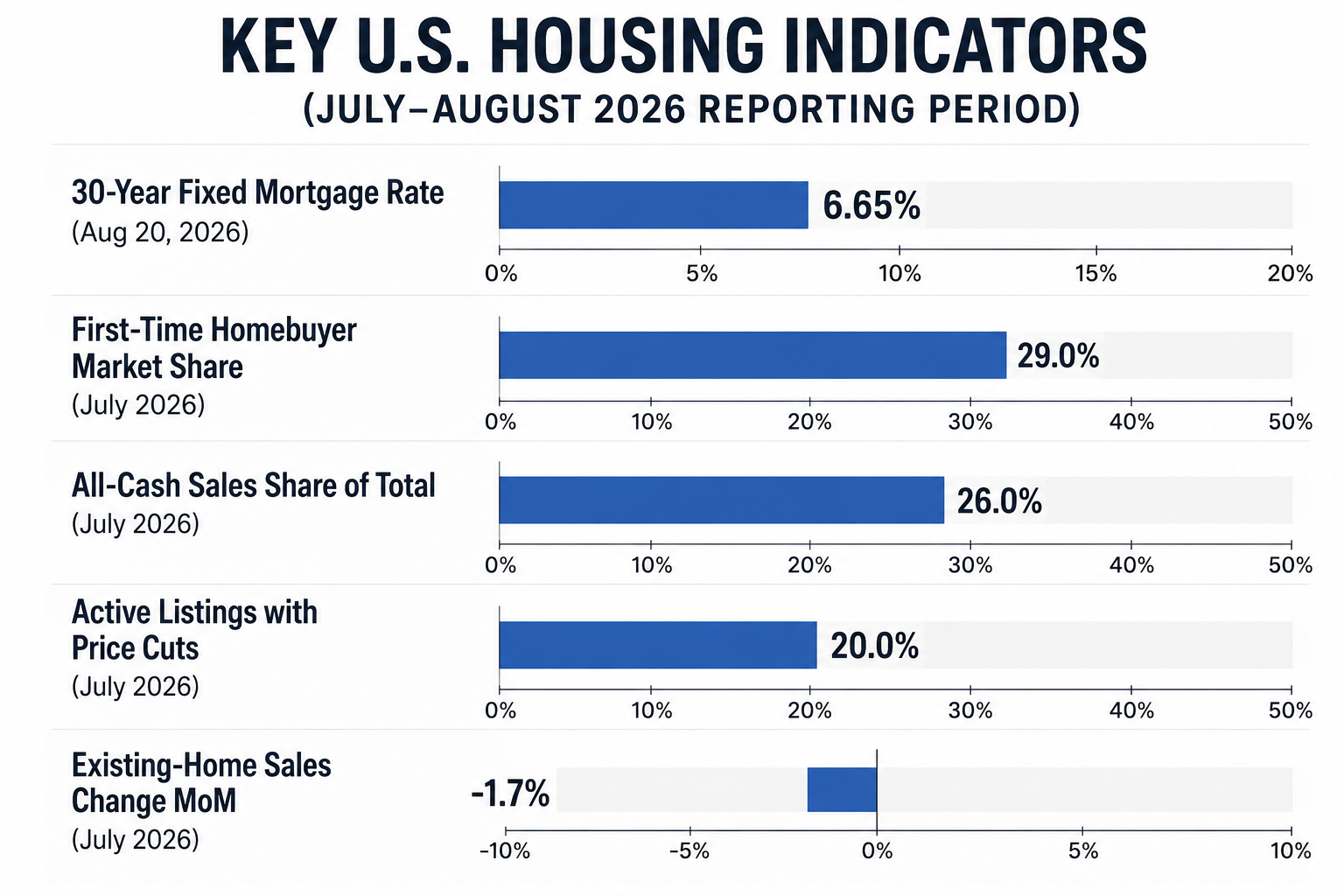
This graph illustrates why motivated sellers take longer to convert: high debt costs suppress buyer demand, leading to slower transaction velocity and elevated price reductions.
Source: Freddie Mac (Aug 20, 2026), NAR (Aug 11, 2026), Realtor.com (Aug 3, 2026). Shows persistent debt costs, reduced first-time buyer demand, and elevated price cuts.
Why This Matters: The Psychology of the 2026 Motivated Seller
Why does macroeconomic data dictate how you handle inbound seller leads? Because seller motivation is a moving target that evolves, not an instant reaction.
When an off-market homeowner fills out your form or answers a cold call today, they are rarely ready to accept a 65–70% Maximum Allowable Offer (MAO) on Day 1. Most sellers anchor to peak neighborhood values despite deferred maintenance.
In an environment where price reductions sit at 20% and days on market are stretching, sellers move through a distinct psychological cycle:
-
Denial (Days 1–14): They believe they can list on the MLS and get top dollar without making repairs.
-
Friction (Days 15–45): They interview agents or test the market, realizing retail buyers demand turnkey condition and concessions.
-
Fatigue (Days 45–90): Carrying costs, code violations, pending foreclosure dates, or tenant issues compound.
-
Action (Days 90+): The pain of holding the asset eclipses the discount required to sell for cash.
If you stop following up after Day 3, you are paying for marketing that educates the seller for whichever competitor contacts them on Day 60.
Market Data Table: Translating Real Estate Metrics into Investor Action
| Market Indicator | Prior Period / Historical Norm | Latest 2026 Data Point | Net Change / Spread | Strategic Investor Action |
|---|---|---|---|---|
|
30-Year Fixed Mortgage |
6.72% (Mid-August 2026) |
6.65% (W/E Aug 20, 2026) |
-7 bps week-over-week |
Stress-test BRRRR refi debt service; underwrite conservative holding costs on flips. |
|
Existing-Home Sales |
4.02M (June 2026 SAAR) |
3.95M (July 2026 SAAR) |
-1.7% MoM |
Anticipate longer disposition windows; build in 60–90 additional days of carrying costs. |
|
First-Time Buyer Share |
40.0% (Historical Average) |
29.0% (July 2026) |
-1,100 bps vs. norm |
Pivot dispo lists toward seasoned cash landlords and institutional buyers. |
|
Price Reduction Share |
18.2% (July 2025) |
20.0% (July 2026) |
+180 bps YoY |
Use local price-drop data in follow-ups to anchor seller expectations to reality. |
|
All-Cash Sales Share |
24.0% (Historical Trend) |
26.0% (July 2026) |
+200 bps above trend |
Strengthen relationships with cash buyers and maintain accurate buyer criteria to improve disposition speed and reduce assignment risk. |
Speed-to-Lead: The 60-Second Inbound Rule
Before executing long-term follow-up sequences, prioritize inbound response time. Lead conversion benchmarks compiled by SwiftLeads AI in their August 16, 2026 report reveal that contacting an inbound lead within 60 seconds yields the highest conversion rates.
When a distressed property owner submits a form on your site, they are often on their phone submitting forms to multiple buyers.
The Lead Intake Protocol:
- 0–60 Seconds: Trigger a live phone call directly to your acquisitions specialist or automated dialer.
- 0–5 Minutes: If unanswered, send an automated, personalized SMS referencing the property address.
- 0–10 Minutes: Deliver a short email acknowledging receipt of the inquiry and outlining the next steps.
- First Contact Objective: Secure an appointment or property walkthrough immediately. Never end a live discovery conversation without locking in a specific date, time, and method for the follow-up review.
The 2026 Follow-Up Framework: The 5-to-12 Touch Architecture
As outlined in REI Reply's lead nurturing operational guide published August 11, 2026, high-producing acquisition teams coordinate multi-channel outreach across Voice, SMS, Email, and video rather than leaning on a single channel.
Phase 1: High-Velocity Intake (Days 1–7 | 5–7 Touches)
- Day 0 (Minute 1): Inbound phone call.
- Day 0 (Minute 5): Contextual SMS (if unanswered).
- Day 0 (Minute 15): Introductory email with local investor credentials.
- Day 1 (Morning): Phone call + Value SMS (sharing a recent neighborhood sales comp).
- Day 3 (Mid-Day): Educational email explaining net proceeds vs. gross MLS sales price.
- Day 5 (Late Afternoon): Relationship check-in call focused on the seller's timeline and logistical obstacles.
- Day 7 (Morning): Social proof SMS sharing a case study from their immediate zip code.
Phase 2: Active Discovery & Value Delivery (Days 8–30 | 2 Touches / Week)
- Touch 8 (Day 11 - Email): Send a personalized 60-second Loom video breaking down how you evaluated repair scopes in their neighborhood.
- Touch 9 (Day 15 - Phone): Call to discuss regional market adjustments: "Hi John, active listings in your county rose 4% this month—wanted to see if you're still planning to move before winter."
- Touch 10 (Day 19 - SMS): Problem-solving probe: "Hey John, was the repair cost estimate the main roadblock on 123 Maple, or was the closing timeline more important?"
- Touch 11 (Day 24 - Email): Detailed breakdown on local buyer activity and closing costs.
- Touch 12 (Day 30 - Phone): 30-day pipeline re-evaluation call.
Phase 3: Strategic Nurturing (Months 2–6 | Bi-Weekly Touches)
- Bi-Weekly Touch A: Direct SMS tailored to their specific motivation trigger: "Hey Sarah, checking in on the probate filing process—did the court assign the executor yet?"
- Bi-Weekly Touch B: Micro-market update showing recently closed cash sales and active days on market in their subdivision.
Phase 4: Long-Term Pipeline Asset Management (Months 6–24+ | Monthly Touches)
- Coordinate automated direct mail postcards with automated SMS pulses and quarterly personal check-in calls from your acquisition team.
Follow-Up Trend Graph: Contract Conversion by Touch Count
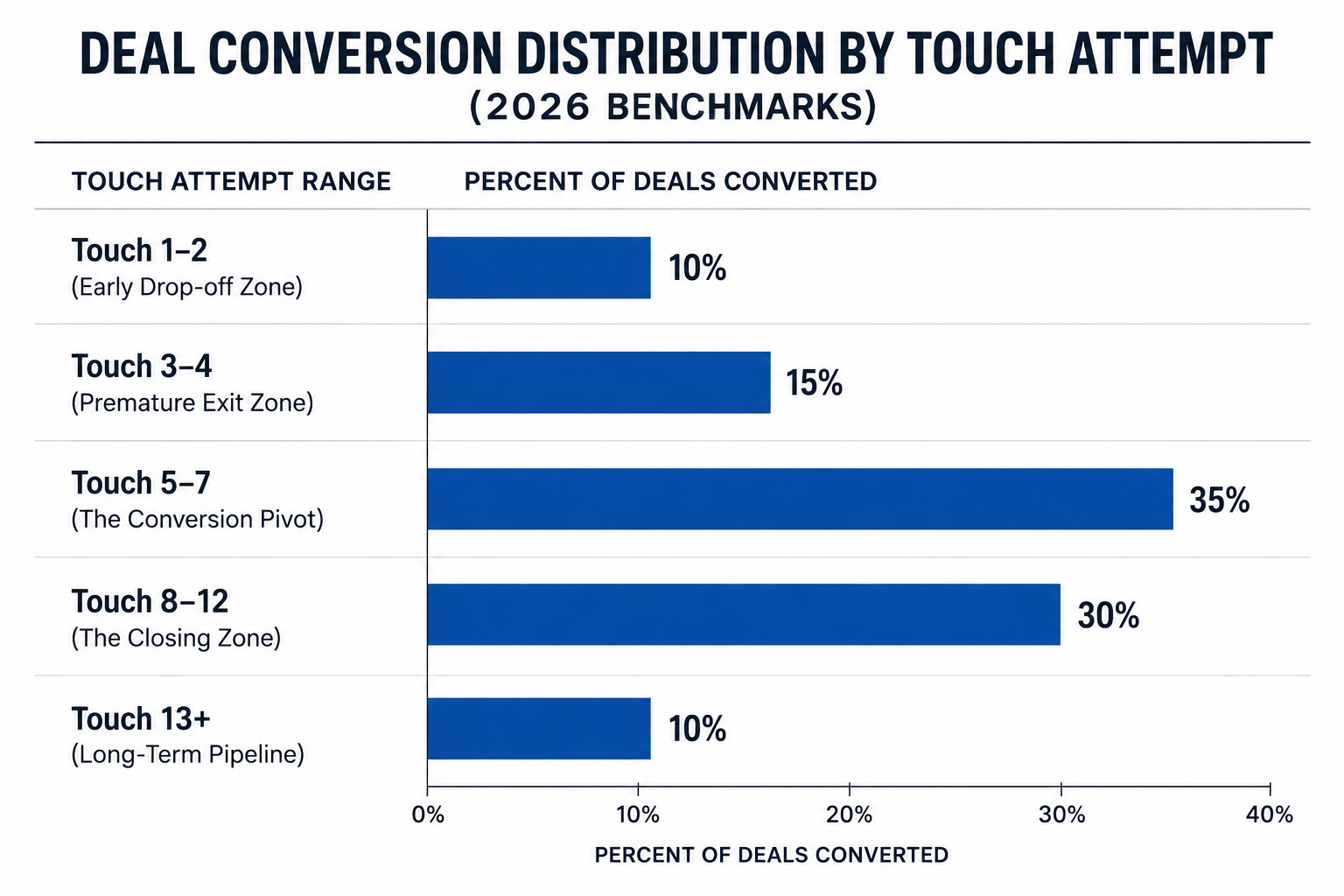
This graph underscores why stopping outreach after two or three attempts leads to deal loss: nearly two-thirds of signed contracts close between the 5th and 12th touch.
Source: SwiftLeads AI (Aug 16, 2026) & REI Reply (Aug 11, 2026). Shows that 65% of all signed contracts close between touches 5 and 12.
Copy-and-Paste Scripts for August 2026
Effective scripts lead with relevance, address market realities, and end with a low-friction question.
1. Day 0 SMS Template (Under 160 Characters)
Hi [First Name], this is [Your Name] with [Company]. Just reviewed your property at [Address]. Quick question: are you looking to sell as-is, or would you consider making repairs if the price made sense?
2. Day 1 Phone Script (Value-Driven Comp Analysis)
Investor: "Hi [First Name], it’s [Your Name] with [Company]. I was reviewing active listings and recent sales over on [Street Name / Neighborhood] this morning. I noticed a home two doors down had to cut its asking price after 45 days on the market because buyers were struggling with today's 6.65% interest rates. That got me thinking about your property—what is your ideal timeline for wrapping this up if you didn't have to deal with inspections or mortgage contingencies?
3. Day 3 Educational Email Template
Subject: How we calculate cash offers in today's 2026 market
Hi [First Name],
You mentioned you were curious about what your property on [Address] might bring in an off-market sale.
With mortgage rates hovering around 6.65% and retail inventory expanding, we use a straightforward 4-step framework to ensure our numbers work for both parties:
- After-Repair Value (ARV): We pull recent neighborhood sales of fully renovated homes.
- Estimated Repair Costs: We calculate the exact budget required to bring the home to top-tier condition without asking you to make any repairs or clean out the property.
- Holding & Financing Costs: We factor in debt service, taxes, insurance, and closing expenses.
- Net Cash Offer: The remaining balance is your clean cash payout—with zero realtor commissions, no appraisal contingencies, and a closing date you choose.
For a home in your neighborhood, that generally lands in the $[Low] to $[High] range, but I'd need a brief 10-minute walkthrough to give you a firm number.
Are you open to a quick 15-minute call this Thursday to review the comps together?
Best regards,
[Your Name]
[Company Name] | [Phone Number]
Troubleshooting Follow-Up Breakdowns: A Diagnostic Guide
Problem 1: "Sellers ghost after receiving our cash offer."
-
Why It Happens: The offer was delivered via email with no verbal context, or the cash MAO created sticker shock without illustrating net proceeds.
-
What to Change: Never deliver an off-market cash offer via email without a verbal review. Walk the seller through gross listing costs (6% agent commissions, 3% seller concessions, 2% closing costs, and 60 days of holding costs) versus a net cash offer.
-
Next Action: Call the ghosted seller: "Hey [First Name], I know our cash number was lower than you hoped. Let's look at creative terms—if I can give you your exact asking price, would you consider carrying a note with monthly interest?"
Problem 2: "Marketing generates leads, but sellers demand 100% of retail."
-
Why It Happens: Seller equity expectations are anchored in 2021–2022 comps, while local inventory has expanded.
-
What to Change: Incorporate local MLS price-reduction data into your Day 3–5 follow-up sequence.
-
Next Action: Send an updated CMA showing active days on market for unrenovated homes in their subdivision.
Problem 3: "Leads respond initially, but stop answering on Day 7."
-
Why It Happens: Your follow-up sequence lacks value and sounds like repetitive collections calls ("Just checking in again...").
-
What to Change: Shift to value-first touches: local zoning updates, probate resources, contractor checklists, or vendor recommendations.
-
Next Action: Deploy a neighborhood sales alert or send a 60-second video explaining a creative solution tailored to their specific situation.
Regional Variations: Adapting Follow-Up by Market Type
-
High-Inventory & Sunbelt Metros (e.g., Florida, Texas, Southeast): Elevated construction and rising active inventory have shifted leverage toward buyers. Emphasize certainty, speed, and zero inspection risk. Use price-drop statistics in your Day 5–10 scripts to highlight the risks of listing on the MLS.
-
Supply-Constrained Markets (e.g., Northeast, Midwest): Inventory remains tight with sub-3-month supplies. Focus on convenience, post-occupancy leaseback options, and moving logistics rather than deep cash discounts. Introduce creative financing (subject-to, seller carryback) earlier in the follow-up cycle.
Takeaways by Investor Experience Level
For Beginner Investors
-
Avoid the Single-Touch Trap: Recognize that a "No" or non-response on Day 1 is rarely permanent. Use a CRM or spreadsheet to enforce at least 7 touches in the first 14 days.
-
Master Speed-to-Lead: Configure phone push notifications for inbound form fills. Calling within 60 seconds will immediately increase your initial conversation rate.
-
Stop Pitching Price Immediately: Spend the initial conversation asking open-ended questions about the seller's moving plans and timeline before running numbers.
For Seasoned Operators & Scaling Teams
-
Integrate AI-Assisted First-Touch Routing: Deploy conversational AI tools to handle instant speed-to-lead qualification during off-hours, handing warm prospects directly to your acquisitions team for touches 4 through 12.
-
Segment Pipelines by Motivation Trigger: Structure custom CRM drip sequences for probate leads, pre-foreclosures, tax delinquent lists, and tired landlords.
-
Run Weekly Pipeline Audits: Dedicate 2 to 3 hours every Monday morning exclusively to reviewing stalled leads between Days 15 and 90. Have senior acquisitions reps re-engage cold leads with creative financing terms.
Your Step-by-Step Action Plan
-
Audit Your Trailing 90-Day Lead Log: Calculate your average number of touches per lead. If your metric is below 5, you have identified your primary deal leakage point.
-
Standardize Your 7-Day Intake Cadence: Program your CRM with the Day 0–7 multi-channel schedule (Phone, SMS, Email, Video).
-
Refine Your Outbound Messaging: Replace every generic "Just checking in" template with a value-driven script referencing current market comps, financing dynamics, or repair calculators.
-
Establish Dedicated Follow-Up Time Blocks: Protect two 90-minute blocks on your calendar every week dedicated exclusively to outbound dials on leads older than 14 days.
Conclusion & Coaching Action
Closing deals in the August 2026 housing market is no longer about who spends the most on marketing—it is about who executes the cleanest, most persistent follow-up system. With mortgage rates hovering near 6.65%, price cuts touching 20%, and retail transactions moving at a measured pace, off-market sellers take time, guidance, and multiple data-backed touches to reach a decision.
When you commit to the 5-to-12 touch framework, respond within 60 seconds, and lead with genuine value instead of empty check-ins, you instantly separate yourself from 90% of competing investors. Treat your lead database as an active asset pipeline, not a one-and-done list.
LEARN → APPLY → TEST → IMPROVE → SCALE
Take action this week: audit your current touch count, load these multi-channel scripts into your CRM, and dedicate focused time blocks to working your older pipeline. That is how you turn stalled conversations into signed contracts and build a predictable, scalable acquisitions business in today's market.
Need to Sell Fast? Skip the Listing Process With House Sold Easy
Everything above assumes you have the time and flexibility to price strategically, refresh photos, wait through a showing cycle, and negotiate concessions — and for most sellers, that's still the right approach. But if reading through all of this makes a traditional listing sound like more time, uncertainty, and price-cutting than you're willing to take on, there's another path.
At House Sold Easy, we buy houses directly for cash — no listing, no showings, and no waiting on a buyer's mortgage financing to come through in a market where rates are still hovering near 6.67%. That matters right now: with over 100,000 listings carrying price cuts in a given week and homes taking longer to find a buyer, a traditional sale can mean weeks of open houses and negotiation before you even get to a closing date. We make a fair cash offer, work around your timeline, and can close in as little as a few days — as-is, with no repairs to make and no agent commissions to pay.
Whether you're facing a tight deadline, handling an inherited property, or you'd simply rather not navigate today's slower, more negotiation-heavy market, get a no-obligation cash offer from House Sold Easy and see what a simpler sale looks like.
The lesson isn't that the sellers "lost" $16,000 off their original ask. It's that the original ask was never realistic, and recognizing that early — rather than after two more months of an empty calendar — is what got the home sold.