The Market Thaw 2026: Home Sales Surge as Buyers Return to U.S. Housing
Jan 21, 2026
Written by David Dodge
For much of the past three years, the U.S. housing market has been defined by hesitation. Rising mortgage rates, affordability pressure, limited inventory, and economic uncertainty created a prolonged standoff between buyers and sellers. Buyers waited for rates to come down. Sellers waited for prices to rebound. Transaction volume slowed, confidence weakened, and activity remained muted across most regions.
As January 2026 begins, that stalemate is starting to break.
According to the National Association of REALTORS® (NAR), U.S. existing-home sales rose 5.1% month over month in December 2025, reaching a seasonally adjusted annual rate of approximately 4.35 million homes sold. This marked the strongest monthly increase in nearly three years, occurring during one of the slowest seasonal periods for housing activity.
That combination matters. When housing activity increases during winter, it typically signals a behavioral shift rather than a short-term seasonal bounce. The market is not overheating — but it is clearly thawing.
This article explains what that thaw means, why buyers are re-entering despite ongoing challenges, and how buyers, sellers, and real estate coaches can respond strategically in early 2026.
What a “Market Thaw” Really Means in 2026
A market thaw does not mean a return to bidding wars or runaway appreciation. Instead, it represents a transition from paralysis to participation. Buyers and sellers begin engaging again even though conditions remain imperfect.
The current thaw is driven by acceptance rather than optimism. Buyers have adjusted to higher interest rates and are no longer waiting for a return to historically low borrowing costs. Sellers are beginning to recognize that pricing from 2021 and 2022 no longer reflects today’s reality. This mutual adjustment allows transactions to resume.
In past housing cycles, recoveries often began not when conditions were ideal, but when participants stopped waiting and started making decisions based on realistic expectations. That same pattern is emerging now.
Why Existing-Home Sales Are Rising Now
The rise in home sales is not the result of a single trigger. It reflects multiple forces aligning simultaneously.
Mortgage rates remain elevated compared to long-term historical norms, but they have stabilized and moved lower from recent highs. Industry forecasts suggest 30-year fixed mortgage rates will average in the mid-6% range throughout 2026, which, while still challenging, provides greater predictability for buyers.
Predictability reduces risk. When buyers can reasonably forecast monthly payments, they are more willing to commit, even if rates are not ideal.
At the same time, pent-up demand is being released. Many households delayed moves over the past two years due to uncertainty. Life events such as job changes, family growth, and relocation did not disappear — they accumulated. As conditions stabilized, those delayed decisions resurfaced.
Finally, the timing itself is meaningful. December and January are historically slow months for real estate. A measurable increase during this period suggests buyers are acting intentionally ahead of the spring market, rather than reacting impulsively.
Market Data That Confirms the Thaw (Graph Included)
The shift is supported by credible, national data.
According to Mortgage News Daily, the December 2025 increase in existing-home sales marked the highest sales pace since early 2023, with gains recorded across multiple U.S. regions despite limited inventory.
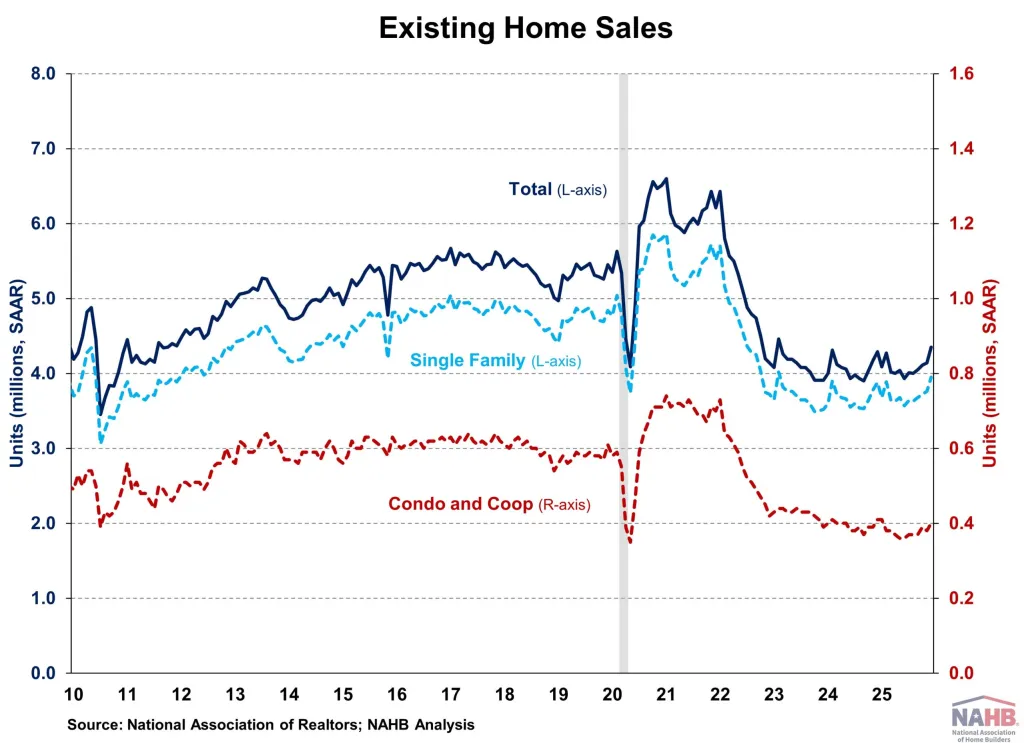
This graph visually shows the rebound in existing-home sales through late 2025 and reinforces the credibility of the “market thaw” narrative. One graph is sufficient and recommended for SEO and reader trust.
What This Shift Means for Buyers in Early 2026
For buyers, a thawing market creates opportunity — but only when paired with discipline.
Buyer activity is increasing, yet the environment remains far more controlled than during the pandemic-era boom. Buyers today are analytical, payment-focused, and selective. They are willing to act, but only when value and affordability align.
Early 2026 presents a strategic window. Competition is lighter than it will be in spring, and many sellers entering the market now are motivated but realistic. Buyers who are prepared can often negotiate more favorable terms than they could later in the year.
However, buyers who delay in hopes of perfect conditions may find themselves competing against a larger pool of buyers as momentum builds. In a thawing market, hesitation often carries a hidden cost.
What Sellers Need to Understand Right Now
For sellers, rising sales activity does not mean the market has swung fully back in their favor.
Today’s buyers are informed and cautious. They analyze pricing carefully, evaluate monthly payments closely, and walk away from homes that feel misaligned with value or condition. Sellers who assume increased activity guarantees strong offers often misread the moment.
Success in early 2026 depends on realism. Pricing must be grounded in recent comparable sales, not peak-market memories. Presentation must reflect buyer expectations, not seller attachment.
Sellers who adapt to today’s conditions tend to capture attention early, while those who resist often experience longer market times and weaker negotiating positions.
Pricing Homes Correctly in a Thawing Market
Pricing remains the single most important factor in determining a successful sale.
In a transitional market, buyers are watching closely. Homes priced accurately generate immediate interest, while homes priced emotionally are often ignored. Buyers compare listings in real time, and pricing missteps are quickly exposed.
Two pricing realities define today’s market:
-
Homes priced correctly in the first two weeks often sell faster and closer to the asking price
-
Homes that miss early momentum frequently require price reductions later, weakening leverage
Psychological pricing continues to matter. Pricing just below major search thresholds improves online visibility and increases showing activity, particularly among payment-sensitive buyers.
Why Staging and Presentation Matter More Than Ever
As buyer confidence returns cautiously, presentation becomes a decisive factor.
Most buyers encounter a home online before ever seeing it in person. Photos, videos, and virtual tours shape perception instantly. Homes that appear clean, neutral, and move-in ready feel lower risk — and lower risk attracts offers.
An effective presentation accomplishes two things:
-
It helps buyers emotionally visualize life in the home
-
It reduces perceived uncertainty around the condition and maintenance
Even modest improvements such as decluttering, better lighting, fresh paint, and improved curb appeal can dramatically improve buyer response. In a market where buyers have options, presentation often separates homes that sell quickly from those that linger.
Investor and Coaching Opportunities in a Transitional Market
Market transitions often favor discipline over speed.
For investors, early 2026 presents opportunities driven by reduced competition and motivated sellers testing the market. Conservative underwriting, stable rental demand, and long-term fundamentals remain essential, but strategic acquisitions are possible.
For real estate coaches, this is a moment to lead with clarity rather than prediction. Clients are overwhelmed by headlines and conflicting narratives. Coaches who can explain context, interpret data, and guide decisions calmly become trusted advisors rather than transactional guides.
Final Thoughts: Why the Early-2026 Market Thaw Truly Matters
The housing market thaw unfolding in early 2026 may not feel dramatic, but it is deeply significant.
This is not a return to speculative excess or unsustainable growth. It is a shift away from fear and indecision toward measured confidence. Buyers are no longer frozen by uncertainty. Sellers are adjusting expectations. Transactions are happening again — thoughtfully, intentionally, and with discipline.
For buyers, this moment rewards preparation and decisiveness. Acting early in a thaw often means less competition, stronger negotiating power, and better long-term positioning. Those who wait for perfect conditions may find themselves entering a more competitive market later in the year.
For sellers, success depends on execution rather than timing. Pricing accurately, presenting homes professionally, and understanding buyer psychology matter far more than trying to catch the exact top of the market. Sellers who adapt to current realities consistently outperform those anchored to the past.
For real estate coaches, this is a defining opportunity. The market does not need louder predictions — it needs clearer guidance. Coaches who help clients understand why the market is shifting, not just that it is shifting, build trust, authority, and long-term relationships.
History shows that the strongest real estate decisions are rarely made at market extremes. They are made during transitions — when fear fades, optimism is restrained, and strategy outweighs emotion.
The early-2026 housing market is in that transition now. Those who recognize it, prepare for it, and act with intention will be best positioned for what comes next.