America's Housing Crisis: Why the Market Can't Save You
Mar 20, 2026
sWritten by David Dodge
America has run out of homes — not because the market failed, but because decades of policy choices, zoning laws, and political cowardice deliberately chose scarcity over shelter. Now, in 2026, the bill is finally due.
Lisa Morales is 34 years old, earns $78,000 a year as a registered nurse in Phoenix, Arizona, and has saved every dollar she could manage for the past six years. She has $41,000 in a dedicated down-payment account. On paper, she is exactly the kind of person the American Dream was invented for. In reality, she is priced out of every home within a 40-minute commute of her hospital. The median home in her metro crossed $450,000 last winter. Her pre-approval letter tops out at $310,000. The gap between what she has earned and what the market demands feels, in her words, "less like math and more like a punishment."
Lisa is not a cautionary tale. She is the statistical average. Across the United States in March 2026, 77 percent of American households cannot afford the median price of a newly constructed single-family home — a figure reported to Congress this past January by the National Association of Home Builders. That is not a housing crisis. That is a housing collapse dressed up in polite policy language. And unlike previous collapses — the S&L disaster of the 1980s, the subprime carnage of 2008 — this one was not caused by reckless speculation or financial fraud. It was built, brick by brick, by the choices America's governments, investors, and institutions made over three decades.
6M Home shortage
estimated nationally
77% U.S. households
priced out of median new home
38% Median home prices
would need to fall to restore affordability
What follows is a clear-eyed accounting of how America arrived at this moment — and an honest assessment of whether the solutions on the table in 2026 are sufficient to undo forty years of damage. The short answer: the market alone never could, and the politics of the moment make genuine transformation brutally difficult. But that does not mean nothing can change. It means we have to stop pretending that the problem is merely economic.
The Anatomy of a Manufactured Shortage
America does not have a housing shortage because not enough land exists. The United States has more than 2.3 billion acres. It has a housing shortage because the most productive, job-rich, wage-generating corners of the country — the metros where a young person can actually build a career — have been systematically sealed off from new construction for decades.
The mechanism is zoning. More than 33,000 state and local jurisdictions in the United States hold authority over land use. Many of them, particularly in prosperous suburbs, have passed layer upon layer of ordinances that effectively mandate that only one type of housing — a detached single-family home on a generously sized lot — may be built across the vast majority of their residential land. Missing middle housing: townhomes, duplexes, small apartment buildings — the bread-and-butter stock of cities that worked for ordinary people throughout most of the 20th century — has been made illegal in enormous swaths of the country.
This is not an accident of history. Exclusionary zoning was deliberately constructed in mid-20th-century America as a tool of economic and racial segregation — a way to ensure that the growing wealth of suburban homeownership would be shared with as few people as possible. That legacy casts a long shadow. Today, the same mechanisms that once served overtly discriminatory ends now serve a simpler, if no less damaging, purpose: protecting the asset values of homeowners, at the direct expense of everyone else.
The numbers are stark. The AEI Housing Center estimates that zoning reform alone — removing the legal barriers that prevent gentle density — could unlock the construction of 1.5 million additional housing units per year. The housing industry itself projects that comprehensive zoning changes would produce between 300,000 and 500,000 more homes annually. Against a six-million-unit deficit, neither figure is sufficient on its own. But both make a meaningful dent. Without that dent, everything else being debated in Washington right now is theater.
Key Context — The Affordability Equation
Fannie Mae calculations published in early 2026 found that restoring affordability to 2016–2019 levels would require one of three near-impossible shifts: median home prices falling 38% to roughly $257,000; median household income rising more than 60% to $134,500; or mortgage rates falling to 2.35%. As of March 2026, none of these is remotely on the horizon.
The Rate Trap and the Lock-In Effect
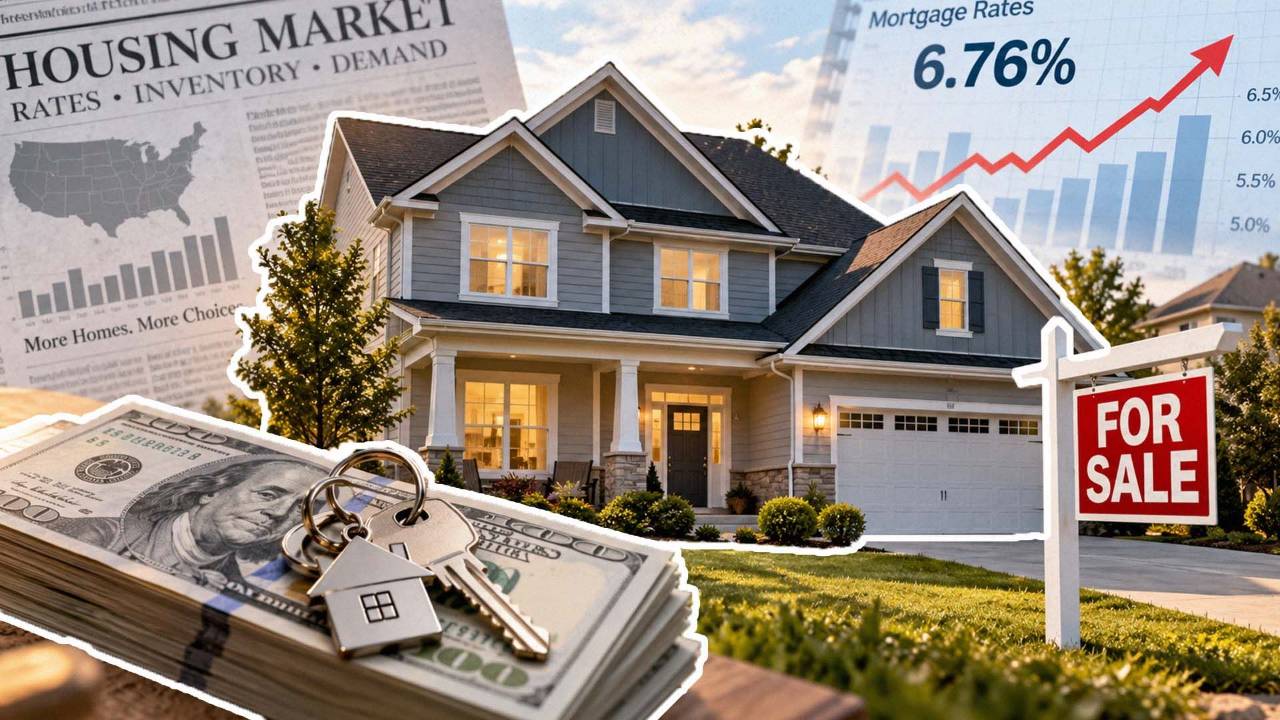
If zoning is the foundational disease, mortgage rates are the acute crisis layered on top. In 2020 and 2021, the Federal Reserve's emergency pandemic policy pushed 30-year fixed mortgage rates below 3%. Millions of American homeowners locked in those rates. They are not leaving. Why would they? To sell a home financed at 2.8% and purchase a new one at 6.5% is to voluntarily double your monthly housing payment for the privilege of moving. This phenomenon — what analysts call the "lock-in effect" or "golden handcuffs" — has removed millions of homes from the for-sale market that would otherwise be circulating.
HousingWire's policy analysis heading into 2026 put the situation plainly: mortgage rates would need to fall below 4% before even half the locked-in homeowner market would meaningfully consider refinancing or selling. The Federal Reserve, still navigating persistent inflation risk and uncertain economic conditions, is nowhere near that territory. Rates as of this writing remain in the low-to-mid 6% range, and the consensus forecast — including projections from Redfin's economic team — is that they will not dip below 6% for any sustained period in 2026.
This creates a grim arithmetic. Supply is constrained by both zoning and by the paralysis of existing homeowners. Demand — particularly from millennials who delayed homeownership and Gen Z buyers now entering their prime earning years — remains robust, precisely because renting is itself becoming unaffordable. According to CBRE Investment Management's latest housing market analysis, median wage growth has roughly kept pace with apartment rent increases over the past six years. But the cost to own has diverged catastrophically from the cost to earn. The result is a market where neither renting nor buying feels viable for an enormous slice of the population.
A Crisis Decades in the Making
- 1970s–1990s - Exclusionary single-family zoning spreads across American suburbs. Building codes thicken from hundreds to hundreds of thousands of pages. Permitting timelines lengthen from weeks to years in the highest-demand metros.
- 2012–2022 - Ultra-low interest rates engineered by the Fed to stimulate post-recession growth instead inflate home prices dramatically. Weak housing construction — still hamstrung by zoning — means new money chases a near-static supply of homes. Prices in major metros double or more.
- 2022–2023 - The Fed raises rates from near-zero to 5.25–5.50% to combat inflation. Residential permitting falls more than 20% in a single year — one of only three such drops since 1960. The "lock-in" effect freezes resale inventory as millions of homeowners refuse to trade 3% mortgages for 7%.
- 2025–Early 2026 - Bipartisan acknowledgment of the crisis intensifies. The ROAD to Housing Act passes in Congress. The Trump administration proposes making 1.5 million acres of federal land available for residential development. The Urban Institute publishes calls for a comprehensive national housing affordability strategy.
- March 2026 - Affordability ratios remain at historic lows. Mortgage rates sit in the low-6% range. The median U.S. home price is forecast to rise another 1% this year. A "Great Housing Reset" — Redfin's term for a multi-year normalization — is underway, but relief for today's buyers remains years away.
What Washington Is Actually Doing — and Why It May Not Be Enough
The year 2026 has brought the most sustained bipartisan attention to housing affordability in decades. That is genuine progress. It is also, when examined closely, a concerning indicator of how far the policy response still is from matching the scale of the problem.
The Trump administration's housing reform agenda — detailed by housing economists at Norada Real Estate — focuses on several supply-side levers that experts broadly endorse. These include streamlining permitting processes, opening approximately 1.5 million acres of federal land for residential development, reforming how federal grants incentivize new construction, and pursuing the ROAD to Housing Act's provisions around manufactured housing and reduced environmental review timelines. Housing industry projections suggest that aggressive zoning reform could yield between 300,000 and 500,000 additional homes annually — meaningful numbers against the backdrop of a six-million-unit deficit.
The contradictions, however, are real and significant. The same administration pursuing supply-side housing reform has implemented tariffs on imported building materials. Steel, lumber, and construction hardware facing elevated import duties mean that the cost of building each new home has risen even as the political rhetoric promises to make housing more affordable. The National Association of Home Builders has documented this directly: construction cost inflation continues to outpace general inflation, with property insurance costs in disaster-prone regions adding thousands of dollars per year to the total cost of homeownership even after the purchase is made.
The deeper problem is structural. Federal policy can set incentives and remove barriers. But the Urban Institute's 2026 housing challenges analysis is clear on this point: local and state policies will continue to have a far greater impact on housing supply than anything Washington can legislate. More than 33,000 jurisdictions hold zoning authority. Federal incentives can encourage them to reform — and there is genuine evidence that the political winds are shifting, with YIMBY (Yes In My Backyard) legislation advancing in California, Montana, Florida, and several other states. But no federal statute can compel a city council in an affluent suburb to allow apartment buildings near its train station.
The Urban Institute's framework for a national housing strategy identifies three essential, interdependent pillars: unlocking production through land use reform; expanding financial access for lower-income buyers and renters; and increasing the stock of deed-restricted affordable housing that remains affordable over time, not just until the next hot market turns it into a luxury condo. All three are necessary. Progress on one without the others produces incomplete results. Right now, the federal conversation is heavily tilted toward the first pillar, lightly engaged with the second, and openly hostile — in terms of federal funding priorities — to the third.
The Invisible Cost: What Unaffordable Housing Does to a Country
Housing policy debates have a way of devolving into abstractions: basis points, unit counts, median prices, affordability indices. Behind those numbers is a more fundamental question about what kind of country America wants to be. The answer being delivered by the current housing market is not a comfortable one.
When housing is unaffordable, young people delay family formation. The AEI Housing Center has linked the soaring cost of housing directly to America's record-low fertility rate — now at just 1.6 children per woman. When you cannot afford a two-bedroom apartment, let alone a home with a yard, having children does not feel like an option. The multigenerational household — once a marker of immigration and early-career financial strain — is now, per Redfin survey data from late 2025, a permanent design preference that home renovation professionals expect to be among the dominant trends of 2026. Parents are converting garages into secondary suites for adult children who cannot afford to leave. This is not a lifestyle choice. It is a symptom of a market failure.
When housing is unaffordable, workers cannot move to where jobs are. Economic dynamism depends on labor mobility — on a nurse being able to take a better-paying hospital job in another city, on a software engineer being able to relocate to where the company needs her. When moving means trading a rent-stabilized apartment for a $3,000-a-month one-bedroom, mobility collapses. Productivity suffers. Regional inequalities calcify.
When housing is unaffordable, homelessness rises — and not in the ways that conventional political narratives describe. Urban Institute research published in January 2026 is explicit: the most effective interventions against homelessness are housing-based, not punitive. Communities that create accessible permanent supportive housing and rapid rehousing pathways reduce both the number of people experiencing homelessness and the amount of time they spend homeless. Policies that criminalize unsheltered living without providing housing alternatives do neither.
The Climate Dimension
There is a housing dimension to climate risk that rarely appears in affordability discussions. Across Florida, California, and the Gulf Coast, property insurance premiums have surged to the point where, in some cases, homeowners pay more annually for insurance than for their mortgage. One member of Congress remarked in a January 2026 committee hearing that his household insurance had exceeded his mortgage payment — "It's insane," he said. The Urban Institute's 2026 housing challenges analysis identifies climate resilience as a critical emerging pressure on housing stability, one that will reshape where affordable housing can sustainably exist.
The Path Forward: A Realist's Guide to Actually Fixing This
There is no fast solution. Anyone — politician, pundit, or real estate economist — who tells you otherwise is either misrepresenting the scale of the problem or selling you something. Redfin's economists, who coined the phrase "Great Housing Reset" to describe the next several years, estimate it will take approximately five years from now for the housing market to return to a semblance of normal affordability — and that assumes sustained political will, continued zoning reform, and an economic environment that does not deteriorate into recession.
The honest framework for making genuine progress includes several non-negotiable elements that no single level of government can provide alone.
First, zoning reform must become non-optional. The YIMBY movement — long derided as politically unserious — has proven that state-level preemption of exclusionary local zoning is legally viable and politically achievable. Montana, Florida, and Texas have all moved in this direction in recent years. The Housing for the 21st Century Act currently pending in Congress would condition federal transportation and infrastructure dollars on local governments demonstrating meaningful housing production. This kind of conditionality — used successfully in other policy areas — is perhaps the most effective lever available to the federal government to break the grip of exclusionary local zoning.
Second, the federal land opportunity is real but requires careful execution. The AEI Housing Center's research indicates that selling just 0.1% of federal land — parcels near existing infrastructure in fast-growing Western metros could create capacity for roughly 3 million homes without touching protected lands. Coordinating roads, utilities, and permitting upfront, then letting private builders work quickly, is the model. Done badly — with insufficient infrastructure, weak deed restrictions, or poor community planning — it produces sprawl without affordability. Done well, it could be the most significant federal housing initiative since the Homestead Act.
Third, supply-side reform cannot do the job alone. CBRE Investment Management's analysis is direct on this point: the private sector has a critical role in bringing new supply to market, but it will not voluntarily build housing for the lowest-income Americans without subsidy. The Low-Income Housing Tax Credit, Section 8 vouchers, and community land trust models are not charity programs — they are infrastructure for the housing market's lowest floors. Cutting them without replacing them with something equivalent does not reduce costs. It increases homelessness.
Fourth, permitting reform must be genuine, not theatrical. The NAHB's 10-point housing affordability blueprint identifies permitting delays as a significant driver of construction cost inflation — adding months and sometimes years to projects, and adding tens of thousands of dollars per unit in carrying costs. A meaningful reform agenda would impose time limits on governmental permitting reviews, streamline environmental compliance for infill projects in already-developed areas, and reduce the extraordinary development fees that some localities — California being the most egregious example, with fees sometimes exceeding $100,000 per unit — impose before a single permit is issued.
Finally, demand-side policies need honest accounting. Down-payment assistance programs, expanded mortgage credit, and tax incentives for first-time buyers are politically popular. They are also, on their own, counterproductive if supply does not grow to meet stimulated demand. The policy lesson of 2012–2022 is unambiguous: inject purchasing power into a constrained supply, and prices rise to absorb it. Every dollar of buyer subsidy without a corresponding housing unit built is, functionally, a transfer to existing homeowners at the expense of future ones.
The House America Built for Itself
Lisa Morales, the nurse in Phoenix, will probably not be a homeowner in 2026. She may not be one in 2027 or 2028 either, unless something changes more dramatically than current forecasts suggest. That is not a failure of her effort, her discipline, or her imagination. It is the predictable result of a housing market that was redesigned, over many decades, to preserve wealth for people who already had it.
The cruelest irony of the American housing crisis is that the people who built it did so largely in the name of protecting their own homes' values. Exclusionary zoning, development fees, permitting delays, NIMBY opposition to apartment buildings near transit — every one of these mechanisms was deployed by people who already owned, to keep their asset prices elevated. And it worked. Home values for existing owners grew explosively. The cost was borne entirely by the people who came later.
What gives 2026 a thin sliver of genuine optimism is that the political consensus has finally broken. The voters who made housing costs their top issue in the November 2025 elections were young, cross-partisan, and angry in a way that tends to produce legislative action over time. The YIMBY coalition includes libertarians who believe in market solutions and progressives who believe in social equity — a combination that has historically been able to move obstinate local politics. The federal land opening, if executed with competence, offers a genuine supply infusion. The ROAD to Housing Act, whatever its limitations, represents bipartisan acknowledgment that the problem is real.
But none of this is fast, and none of it is guaranteed. The Urban Institute's framework is clear: a genuine national housing affordability strategy requires sustained federal leadership, dedicated state and local partnership, and comprehensive action across supply, access, and affordability preservation simultaneously. Piecemeal interventions — opening some land here, streamlining some permits there, offering some tax incentives for buyers — will produce piecemeal results.
America has run out of homes. It did not happen by accident. Fixing it will not happen by accident either. It will take the kind of sustained, honest, politically difficult commitment to the public good that this country has historically reserved for crises it cannot ignore any longer.
We are there.
Foundation issues, roof replacements, HVAC failures, and flooded basements can price a home out of the conventional market entirely. Rather than spending $40,000 on repairs to list a home for $140,000, a cash buyer will often purchase the home directly at a fair price that accounts for the condition.
The home of your dreams starts with understanding the numbers. And the numbers start with a mortgage calculator.