10 Tips for First-Time Real Estate Investors
May 07, 2026
Written by David Dodge
Based on the work of David Dodge · Expanded & Updated
The honest, boots-on-the-ground guide to getting started — without losing your shirt or your sanity.
Let me be upfront with you: real estate investing is not a get-rich-quick scheme. It never was. Anyone who tells you otherwise is either trying to sell you something or has been very, very lucky — and luck, as any seasoned investor will tell you, is not a strategy. But here's what real estate is: one of the most proven, time-tested paths to building generational wealth that ordinary people have access to. You don't need a finance degree. You don't need to start with millions. What you do need is education, patience, and the willingness to make a few mistakes along the way.
I've spoken with enough first-time investors to know that the biggest barrier isn't money — it's fear. Fear of making the wrong call, fear of the paperwork, fear of having a tenant who doesn't pay rent. These fears are legitimate. But they're also manageable when you go in with the right knowledge. That's exactly what this guide is for.
Whether you're thinking about buying your first rental property, considering wholesaling, or just trying to figure out what any of this even means, these ten principles will give you a strong foundation. We're going to get into the real stuff — not just the surface-level platitudes you find everywhere, but the practical thinking that separates investors who build wealth from those who end up with an expensive headache.
Education First
Know before you go. The cost of ignorance in real estate is far higher than any course or book.
Patience Pays
Wealth built through real estate compounds slowly, then all at once. Don't rush it.
Systems Win
Good investors build systems. Great investors let those systems work while they sleep.
Tip No. 01: Invest in Your Education as You'd Invest in Property
Here's an analogy that stuck with me: you wouldn't hand a contractor $50,000 to renovate a house you'd never walked through, right? And yet people sink life savings into properties without putting a dime into learning how the game actually works. Your education is the first investment you make — and frankly, it's the one with the most reliable return.
This doesn't mean you need to spend thousands on a fancy bootcamp. The amount of free, high-quality real estate investing content available today is genuinely staggering. BiggerPockets alone has more resources, forums, podcasts, and calculators than most paid programs. You can listen to experienced investors break down deal analyses on your morning commute. You can read books like Rich Dad Poor Dad or The Millionaire Real Estate Investor for under $20. The barrier to education is essentially zero.
What matters more than where you learn is how you apply it. There's a dangerous trap in real estate called "analysis paralysis" — where you learn so much that you convince yourself you need to learn even more before taking action. The antidote is simple: pick a strategy, learn it deeply, and take your first step. Refinement happens in the field, not in the classroom.
“An investment in knowledge pays the best interest.”
— Benjamin Franklin
Real estate investors who've built serious portfolios consistently point to one turning point: the moment they stopped consuming information and started executing. Your goal shouldn't be to know everything — it should be to know enough to take one intelligent step forward.
Tip No. 02: Focus on Emerging Markets Before Everyone Else Does
The secret to real estate wealth isn't finding the hottest market — it's finding the market that's about to become hot. By the time a neighborhood is on every investor's radar, the margins are usually thin and the competition fierce. The real money is made in emerging markets: areas with improving infrastructure, job growth, population influx, and favorable tax environments for investors.
So what should you actually look for? Start with employment data. Cities and suburbs that are attracting major employers — think logistics hubs, tech company expansions, manufacturing facilities — tend to see rental demand rise quickly. According to the National Association of Realtors (NAR), areas with consistent job growth above the national average typically outperform in both property appreciation and rental yield over a five-to-ten year horizon.
Also pay attention to infrastructure investment. When a city breaks ground on a new transit line, a highway interchange, or a major public development project, property values in the surrounding neighborhoods often begin climbing within twelve to eighteen months — well before the ribbon-cutting ceremony.
Practical Action
Pull up the U.S. Census Bureau's population growth data, cross-reference with Bureau of Labor Statistics job numbers, and look for mid-size metros where both are trending upward. Cities like Huntsville, Alabama; Boise, Idaho; and Columbus, Ohio quietly outperformed coastal markets for years before anyone was paying attention.
Tax incentives matter too. Some states and municipalities offer property tax abatements, opportunity zone benefits, or landlord-friendly regulations that can meaningfully improve your cash-on-cash return. Always factor local tax policy into your market analysis — it's a detail that separates the serious investors from the amateurs.
Tip No. 03: The Deal Is Made at Purchase — Buy Below Market Value
This is one of those rules in real estate that sounds almost too simple to be profound, and yet it's the one most beginners violate. Your profit in real estate is largely determined the moment you sign the purchase agreement, not the moment you sell. Buying right is everything.
Think of it this way: if you pay full market value for a rental property, you're betting entirely on appreciation. Appreciation is real, but it's also unpredictable and can reverse. If you buy at a 15–20% discount to market value, you have immediate equity, a cushion against market downturns, and a much healthier cash flow picture from day one.
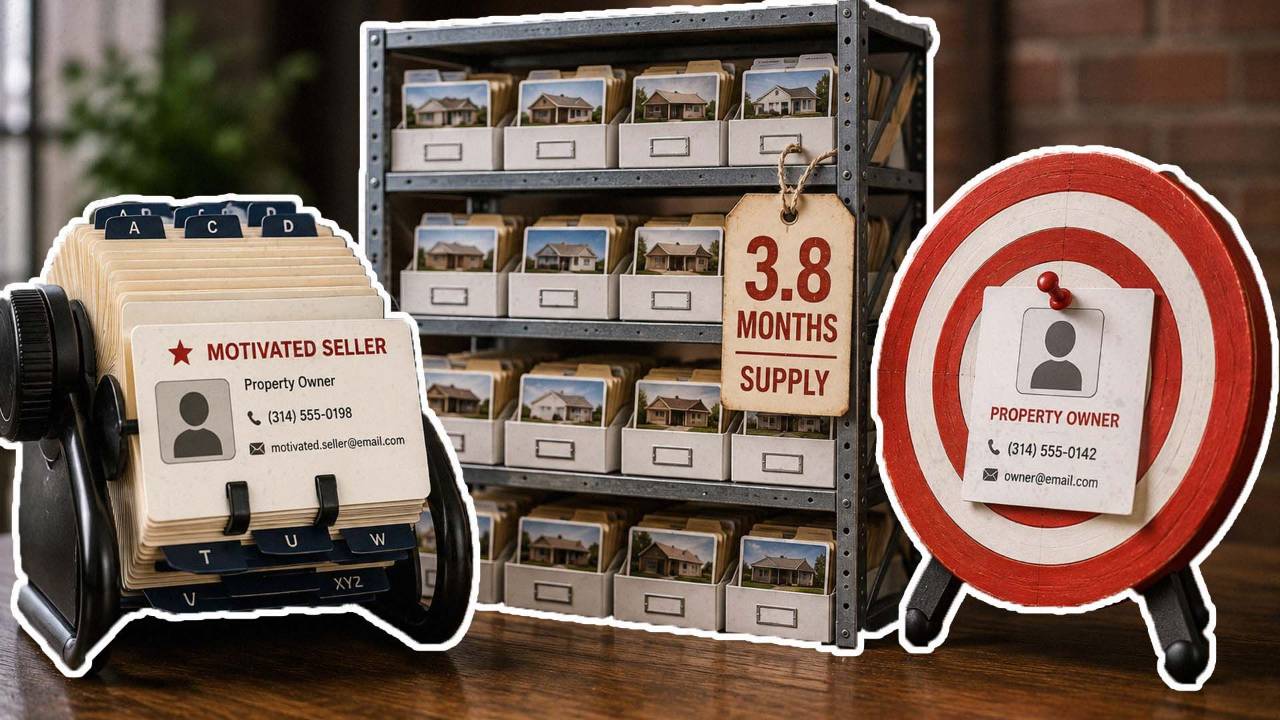
How do you find discounted properties? There are several proven approaches: direct mail campaigns to motivated sellers (people going through divorce, probate, foreclosure, or financial hardship), working with wholesalers who have already put properties under contract below market value, attending foreclosure auctions, or building relationships with real estate attorneys who often know about distressed sales before they hit the MLS.
One word of caution, though — "cheap" and "below market value" are not the same thing. A $40,000 house in a neighborhood with no rental demand, high crime, and poor schools might be cheap, but it's not a good deal. You have to compare the price to the realistic income potential and comparable sales in a market where people actually want to live or rent.
“In real estate, you make money when you buy, not when you sell.”
— Common investor wisdom, often attributed to Warren Buffett's philosophy
Tip No. 04: Diversify — Don't Put Every Egg in One Zip Code
Once you've gotten a taste for real estate investing, there's a natural temptation to double down on what you know: the same city, the same neighborhood, the same property type. It makes sense — familiarity breeds confidence. But over-concentration in a single market is one of the most common ways experienced investors run into serious trouble.
Consider what happened to landlords who owned exclusively in Detroit when the auto industry collapsed, or in Las Vegas during the 2008 financial crisis, when property values dropped 60% from peak. Concentration amplifies both gains and losses. Diversification across multiple markets — and ideally across multiple property types — creates stability and reduces your exposure to any single economic event.
Geographic diversification doesn't mean you need to own property in ten different states. Even spreading across two or three distinct neighborhoods or submarkets within a metropolitan area can make a meaningful difference. A rental property in a college town behaves very differently from one in a suburban family neighborhood or a downtown urban core. Each serves a different tenant base, responds to different economic pressures, and carries different risks.
Property type diversification is worth thinking about, too. Residential single-family homes are the classic starting point, but multifamily units, commercial real estate, and even industrial or storage properties all have their own income profiles. We'll get more into non-traditional real estate in Tip 10, but for now: don't fall in love with any single asset class so hard that you forget other options exist.
Tip No. 05: Never Skip the Inspection — And Know Your Contractor Before You Need One
This one seems obvious, and yet the number of first-time investors who waive inspections "to stay competitive" or "because the deal looks clean" is genuinely alarming. The inspection is not a formality. It is your primary defense against one of the most common ways new investors lose money: buying a property with hidden structural or mechanical issues that cost far more to fix than the deal was worth.
A licensed home inspector will run you $300–600, depending on the market and property size. That is possibly the best $400 you will ever spend. A thorough inspection report will tell you about the condition of the roof, foundation, electrical systems, plumbing, HVAC, and more. What looks like a cosmetic fixer-upper from the street can reveal a failing foundation or outdated knob-and-tube wiring once someone who knows what they're looking for goes through it.
Equally important: build a relationship with a trustworthy, competitively-priced contractor before you need one. Too many investors scramble to find contractors after they've already bought a property, which puts them in a weak negotiating position and often leads to inflated quotes and shoddy work. Ask other local investors for referrals. Interview contractors before you have urgent work. Get at least three bids on any project. And always, always get the scope of work in writing.
Pro Tip
Consider hiring a contractor to walk properties with you before you make an offer. An experienced set of eyes can spot potential problems and give you rough cost estimates that inform your offer price—or help you walk away from a money pit dressed up with fresh paint.
Tip No. 06:Know Your Market Deeply — Down to the Block Level
Understanding "the market" in real estate means something far more granular than knowing what's happening nationally or even citywide. A neighborhood can change dramatically from one street to the next — different school districts, different crime statistics, different tenant demographics, different appreciation trajectories. Successful real estate investors develop what you might call "hyperlocal intelligence": a deep familiarity with specific areas that lets them spot value that outsiders can't see.
This kind of knowledge takes time to build, but it starts with disciplined research. Know the price per square foot for comparable sales in the neighborhoods you're targeting. Know the average days on market. Know the rental rate for similar units. Know the vacancy rate. Know which block has the good school and which block is on the wrong side of the district boundary. These details feel tedious until the day they save you from a bad deal or help you recognize an exceptional one.
According to Zillow Research, neighborhood-level data — including walkability scores, school ratings, and proximity to employment centers — is among the strongest predictors of long-term property appreciation in residential markets. The tools to access this data have never been more accessible to individual investors. Use them.
One more thing: understand the direction a neighborhood is moving, not just its current state. A neighborhood that's rough today but has a new development going in two blocks away and a strong city investment in streetscaping might be a great buy. A neighborhood that looks stable but has a declining population and aging demographics might be a much riskier bet than the surface suggests. Think in trajectories, not snapshots.
Tip No. 07: Keep Immaculate Financial Records — From Day One
If there's one thing that separates investors who scale successfully from those who stay stuck at one or two properties forever, it's financial discipline. And the foundation of financial discipline in real estate is keeping clean, organized, separate records for every investment property you own.
The rule is simple: every investment property gets its own bank account. Every dollar of rent collected goes into that account. Every expense — mortgage payment, insurance, property taxes, repairs, management fees — comes out of that account. This isn't just good practice for tax purposes (though it absolutely is); it also gives you a clear picture of whether each property is actually performing the way you thought it would.
Many investors are surprised — and not pleasantly — when they actually sit down and run the numbers on a property they thought was performing well. Hidden costs accumulate quickly: vacancy between tenants, minor maintenance calls, the occasional appliance replacement, landscaping, and property management fees if you use a manager. A property that looks like it's cash-flowing $500 per month might actually be breaking even once you account for everything.
Use accounting software designed for landlords — Stessa is free and purpose-built for rental property tracking — or, at a minimum, a detailed spreadsheet. The goal is that at any moment, you can look at a specific property and know exactly how it's performing. When tax season arrives, you'll be grateful. And when you're ready to refinance or sell, clean financial records make the process vastly smoother.
Tip No. 08: Understand Tax Laws — They're More Favorable Than You Think
This is the part of real estate investing that most newcomers underestimate, and it might be the most financially significant point in this entire guide. The U.S. tax code is genuinely favorable to real estate investors in ways that it simply is not to people who earn wages or trade stocks. Understanding how to use these advantages legally and intelligently can dramatically change your bottom line.
The two biggest concepts to understand early are depreciation and the 1031 exchange. Depreciation allows you to deduct a portion of your investment property's value each year as a "paper loss" — even if the property is actually appreciating and generating positive cash flow. This can offset your rental income and, in some cases, other income as well, reducing your overall tax burden. The IRS allows residential rental property to be depreciated over 27.5 years, which translates to real annual deductions that significantly improve your effective return.
The 1031 exchange, named after Section 1031 of the IRS tax code, allows you to sell a property and roll the proceeds into a new "like-kind" property without paying capital gains taxes at the time of sale. Done strategically over the course of a career, this allows investors to defer taxes almost indefinitely while continuously upgrading into larger, higher-performing assets. It's one of the most powerful wealth-building tools available to real estate investors, and most people outside of the industry don't even know it exists.
You should absolutely work with a CPA who specializes in real estate — this is not an area to navigate alone. But come to those conversations informed. Familiarize yourself with Schedule E (the IRS form for rental income and expenses), understand which expenses are deductible (mortgage interest, insurance, repairs, depreciation, management fees, and more), and know the difference between a repair (fully deductible) and a capital improvement (depreciated over time). The IRS Rental Income and Expenses guide is a surprisingly readable starting point.
Tip No. 09: Always Be Looking for Ways to Add Value
One of the most powerful things about real estate as an investment is that you're not passive in the way you are with a stock. You can actively take actions that increase the value and income potential of your property. This concept — often called "value-add" investing — is where some of the most interesting opportunities in real estate lie.
The most obvious form of value-add is renovation: updating a kitchen or bathroom in a rental to justify higher rents, or improving curb appeal and interior finishes in a flip to justify a higher sale price. But value-add thinking goes deeper than cosmetics.
Consider this: an apartment complex that currently offers no amenities beyond four walls and a parking lot might be able to generate additional income by adding coin-operated laundry, vending machines, storage unit rentals, or even a dog-washing station. These additions might seem small, but they can add hundreds or thousands of dollars per month in income with minimal ongoing costs — and they also make your property more attractive to tenants, reducing vacancy.
On the commercial side, a property with underutilized square footage might be able to accommodate an ATM, a small kiosk, or a cell tower lease. These arrangements generate income from space that was previously sitting idle. The point is: every time you acquire a property, spend time thinking not just about what it currently generates, but what it could generate with the right improvements or arrangements. According to research published in the Journal of Real Estate and Housing, value-add improvements in rental properties consistently yield higher returns than passive hold strategies in comparable market conditions.
A note on over-improving
The flip side of value-add investing is over-improvement: spending more on upgrades than the market will reward. This is a common mistake in both rentals and flips. A $10,000 kitchen renovation in a luxury rental might add $200/month in achievable rent — that's a 24% return, which is excellent. The same renovation in a working-class neighborhood might add $50/month — a much less compelling case. Match your improvements to your market. Know what comparable properties offer and charge. Never build the nicest house on the block if the block won't support the price.
Tip No. 10: Think Beyond Houses — Non-Traditional Real Estate Is Worth Exploring
Most people, when they picture real estate investing, picture houses. Single-family rentals, maybe a small apartment building. And there's nothing wrong with that — those are legitimate, proven vehicles for wealth. But the real estate investment universe is much larger, and some of the most interesting opportunities live outside the residential world.
Self-storage, for instance, has been one of the most consistently high-performing real estate asset classes over the past two decades. The business is simple: people need a place to put their stuff, and they'll pay monthly for it reliably, often for years. Operating costs are low. Tenant turnover, while frequent, is easy to manage. And unlike residential tenants, storage users have limited legal protections when they stop paying — you can auction the unit after a grace period without the lengthy eviction process that residential landlords sometimes face.
Commercial office and industrial real estate, while more complex, often offers long-term leases (five to ten years is common) that provide exceptional income stability. Triple-net leases — where the tenant covers property taxes, insurance, and maintenance — can create nearly passive income streams that are very appealing to more experienced investors. You trade lower yields for a dramatically reduced management burden.
Mobile home parks have also attracted significant attention from institutional and individual investors in recent years. The land is owned by the investor while residents own their homes, which creates a unique economic dynamic. Residents are sticky — it's expensive and difficult to move a mobile home, which means very low vacancy and stable income.
None of these asset classes is right for every investor, and all of them come with their own learning curves. The point is simply this: don't limit your thinking to what you first imagined when you thought about real estate investing. The field is wide, and somewhere in that width is likely an asset type that's well-suited to your capital, your skills, your tolerance for complexity, and your long-term goals.
The Honest Truth About How Long This Takes
If you've read this far, here's what I want you to walk away with more than anything else: this takes time, and that's okay. The investors you see with ten, twenty, fifty properties didn't build that overnight. They started with one deal — often a messy, imperfect, nerve-wracking deal — and they learned from it. Then they did another. Then another.
Mistakes are not a sign that you're doing it wrong. They're a sign that you're doing it. The investors who never make mistakes are the ones who never started. You will overpay for something at some point. You will have a tenant who causes problems. You will have a repair come up at the worst possible moment. These things happen. What separates successful investors is not the absence of problems — it's the presence of a system, a mindset, and a network that allows them to handle problems without catastrophizing.
Build your network early. Connect with other investors in your area through local real estate meetups (you can find them on Meetup.com or through BiggerPockets). Find a mentor if you can — someone who has done what you're trying to do and is willing to share their experience. Real estate is not a solo sport. The investors who rise fastest are the ones who are most generous with their knowledge and most willing to learn from others.
And be patient with yourself. The wealth that real estate builds is real, but it compounds slowly at first. The first property feels monumental. The second feels slightly less terrifying. By the time you've done five or six deals, the process starts to feel almost routine. That's when the momentum really builds.
You're not on this journey alone — and with the right education, the right mindset, and a willingness to learn as you go, there's no reason you can't build something genuinely meaningful through real estate investing. Take the first step. The rest follows.