2026 Real Estate Investor Guide: Master MLS & Contract Negotiation
Mar 26, 2026
Written by David Dodge
March 2026 Update for Discount Investors
Home prices remain elevated, mortgage rates continue to influence buyer behavior, and the full effects of the NAR settlement plus new MLS policies are now standard across most markets. Whether you wholesale, flip, or run BRRRR strategies, mastering these five pillars can help you secure properties 20–40% below market value while protecting your margins.
As a discount property investor in March 2026, your success depends on controlling every part of the transaction. From finding motivated sellers on the MLS to negotiating rock-solid contracts, accurately forecasting costs with a Closing Cost Calculator, ensuring clean Title & Escrow, and working under smart Buyer Agency agreements — these elements form a complete system that turns leads into profitable deals.
1. MLS (Multiple Listing Service): Your Most Powerful Tool for Sourcing Discount Deals in 2026
Multiple Listing Services (MLS) are private databases created, maintained and paid for by real estate professionals to help their clients buy and sell property. REALTORS® have invested millions to build these systems that enable efficient cooperation between brokers and provide accurate, up-to-date property information to buyers and sellers alike.
In March 2026, there are still hundreds of regional MLS platforms across the country, each operating under common rules that support smooth information exchange. MLS data powers public sites like Realtor.com and Zillow through syndication and IDX programs, but the full power — including seller motivation notes, detailed comps, days-on-market (DOM) history, and repair estimates — is best accessed through a professional buyer’s agent.
For discount investors, the MLS is far more than a listing site. It is a treasure map for motivated sellers. Look for “as-is” properties, probate listings, divorce sales, expired listings, and homes sitting on the market for 60+ days. These signals often indicate owners who need a quick, clean sale — perfect conditions for 15–35% price reductions.
Practical 2026 MLS Strategies for Discount Investors
- Advanced Filtering: Search by high DOM, recent price drops, “investor special,” “fixer-upper,” “cash only,” or “needs work.”
- Comps Mastery: Pull 8–15 recently sold comparables in the same neighborhood to build data-backed offers that justify significant discounts.
- Agent Partnership: Work exclusively with investor-friendly agents who provide real-time MLS alerts, pocket listings, and off-market opportunities shared within broker networks.
- Wholesaling Edge: Use MLS to identify assignable contracts, then market the deal to your cash buyer list for quick assignment fees.
Public portals give only partial data. Full MLS access through a cooperative broker remains the gold standard for serious investors who want to capture maximum equity on every deal.
According to NAR resources, MLS systems continue to evolve with better technology and updated policies in 2026 that give local associations more flexibility while maintaining cooperation. Savvy discount investors combine MLS searches with external tools (as frequently recommended on Discount Property Investor resources) to create a multi-channel sourcing machine.
When done right, consistent MLS mastery can add $20,000 to $60,000 of instant equity per transaction — the difference between a mediocre flip and a home-run BRRRR deal.
2. Buyer Agency in 2026: How the NAR Settlement Changes Create New Advantages for Investors
The biggest shift in buyer representation is now fully embedded in the market. As of August 17, 2024, real estate professionals must enter into written buyer agreements before touring a home, clearly disclosing the amount or rate of compensation. Compensation must be objectively ascertainable — no open-ended or vague language — and cannot exceed what the buyer has agreed to in writing.
This rule applies in most MLS markets and has fundamentally changed how investor-agent relationships work. No longer can buyers assume the seller will automatically cover buyer-agent compensation. Everything is negotiated upfront and documented in a formal agreement.
Why This Is Great News for Discount Property Investors
- You gain full control over agent fees — negotiate flat fees ($5,000–$10,000), 1–2% of purchase price, or performance-based bonuses tied to price reductions.
- Agreements can be customized for your strategy: short-term for wholesaling (assignable contracts) or longer for flipping/BRRRR with extended due diligence periods.
- Clear termination clauses protect you if the agent is not delivering motivated-seller leads or strong negotiation support.
Real-World Investor Example (March 2026): A wholesaler in a Midwest market signs a buyer agency agreement for a $7,500 flat fee covering up to five properties. The agent pulls high-DOM MLS listings, the investor negotiates 25–30% discounts using solid comp data, and assigns each contract for $12,000–$18,000 profit. The written agreement eliminates surprises and aligns incentives perfectly.
Additional 2026 updates to professional standards limit arbitration awards and clarify disclosure rules, reducing potential disputes between brokers. Investors who treat buyer agency as a professional business contract — rather than a casual relationship — consistently close more deals at better prices.
Tip: Interview at least three agents who specialize in investment properties. Ask about their experience with cash offers, as-is purchases, and 1031 exchanges. The right buyer agent becomes an extension of your deal-making team.
3. Contract Negotiation: The Art and Science of Creating Below-Market Wins
Contract negotiation is where discount investors separate themselves from average buyers. In 2026’s market — with more inventory in many regions — sellers are more responsive to well-prepared, data-driven offers.
Core Negotiation Tactics for 2026
- Pre-Offer Preparation: Run full MLS comp analysis, verify seller motivation (probate, relocation, divorce), and prepare proof-of-funds or pre-approval letters.
- Offer Structure: Start 15–30% below asking on distressed properties. Include escalation clauses (up to your true maximum), strong earnest money (1–3%), and protective contingencies.
- Leverage Points: Inspection period (7–14 days), appraisal gap coverage, seller-paid repairs or closing cost credits, and extended closing timelines for rehab planning.
- Wholesaling-Specific Language: Make the contract clearly assignable with “and/or assigns” language to protect your ability to flip the paperwork.
Discount Property Investor frequently teaches the Maximum Allowable Offer (MAO) formula: MAO = (ARV × Discount Rate) – Repairs – Holding Costs – Desired Profit. Using this framework ensures every negotiated price still leaves healthy margins.
Detailed Example: MLS listing at $265,000. Comps show repaired ARV of $345,000. Estimated repairs $45,000. Using a conservative 70% rule plus profit buffer, your MAO lands around $195,000. You offer $185,000 with a $10,000 earnest, a 10-day inspection, and a $12,000 seller credit for closing costs and repairs. After two counteroffers, you settle at $208,000 + $9,000 credit — a net 25%+ discount that leaves excellent profit potential after rehab.
Common mistakes to avoid: Revealing your maximum too early, waiving all contingencies in a hot market, or failing to consult a real estate attorney for state-specific addendums. Treat every negotiation as a business discussion focused on win-win outcomes — speed and certainty for the seller, equity and protection for you.
With practice, strong contract negotiation skills can save or create tens of thousands of dollars per deal while reducing risk.
4. Closing Cost Calculator: Accurate Budgeting to Protect Every Deal’s Profitability
Closing costs remain one of the most variable expenses in any real estate transaction. Average closing costs typically range from 2% to 5% of the home’s purchase price in 2026, though they can reach 3–6% depending on location, loan type, and specific fees.
The smartest investors use a professional Closing Costs Calculator from Fannie Mae early in the process. This tool pulls local data to provide realistic price ranges for lender fees, title insurance, appraisals, taxes, and other common charges.
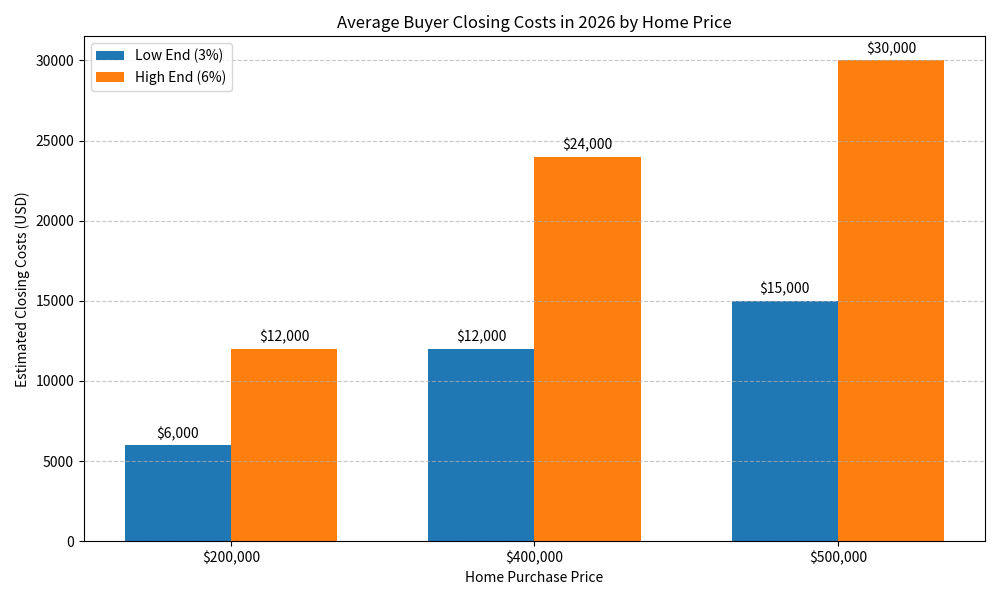
On a typical $300,000 discount purchase, expect $9,000–$18,000 in buyer closing costs. Cash investors skip many financing-related fees, but title insurance, escrow fees, prorated taxes, and recording costs still apply.
Investor Best Practices for Closing Costs in 2026
- Run the calculator before submitting any offer and build the estimated costs into your MAO calculation.
- Negotiate seller concessions specifically for closing costs — many motivated sellers will agree to cover 2–4% to get the deal closed quickly.
- Shop multiple lenders and title companies — differences of $1,000–$3,000 per transaction add up fast on volume investing.
- Factor in prepaid items (property taxes, insurance) that can significantly increase cash-to-close even on cash deals.
Accurate forecasting prevents margin erosion and keeps your rehab budget intact. On multiple deals per year, mastering closing cost management can save $10,000–$30,000 annually.
5. Title & Escrow: Protecting Your Investment with Clean Title and Smooth Closings
Title & Escrow is the final safeguard that ensures you receive a clear, marketable title free of liens, easements, or ownership disputes. A neutral third-party escrow agent or title company holds funds and documents until all contract conditions are satisfied.
Step-by-Step Title & Escrow Process in 2026
- Open Escrow: Immediately after mutual acceptance of the contract. Earnest money is deposited with the escrow holder.
- Title Search & Insurance: The title company examines public records for any clouds on title (old liens, judgments, unpaid taxes, easements). Owner’s title insurance is ordered to protect you against undiscovered issues.
- Review Preliminary Title Report: Investors should carefully examine exceptions and demand the seller clear any serious issues before closing.
- Due Diligence & Contingency Period: Coordinate with inspections, appraisals, and any repairs negotiated in the contract.
- Closing & Funding: All parties sign documents, funds are wired, title is recorded, and keys are released. Cash deals often close in 7–14 days; financed deals typically take 30–45 days.
In March 2026, title companies also assist with any applicable regulatory reporting (such as FinCEN rules for certain entity cash transactions). Experienced investor-friendly title firms can handle high volume and move quickly while maintaining compliance.
Investor Advantages: Use title exceptions discovered during the search as additional negotiation leverage for price reductions or credits. Never skip owner’s title insurance — it is relatively inexpensive protection against future claims that could cost tens of thousands of dollars.
Choose a title/escrow provider with strong reviews from other investors. A smooth, fast close preserves your timeline and reputation in the local market.
Integrate These Five Pillars into a Repeatable System for Consistent Discount Wins
In March 2026, top-performing discount property investors treat MLS sourcing, Buyer Agency agreements, Contract Negotiation, Closing Cost Calculators, and Title & Escrow as one interconnected system rather than isolated steps.
MLS feeds your pipeline with motivated-seller opportunities. Buyer agency structures professional relationships with clear compensation and expectations. Sharp negotiation captures deep discounts. Accurate cost forecasting with a closing cost calculator protects every deal’s bottom line. Finally, diligent title and escrow work ensure you actually own the asset free and clear.
Markets will keep evolving — more inventory in some areas, continued cash-buyer demand, AI-enhanced search tools, and ongoing regulatory adjustments. Investors who build disciplined processes around these fundamentals, while staying connected to communities like Discount Property Investor, will continue finding, negotiating, and closing profitable deals month after month.
Action steps for you today:
- Review your current buyer agency agreement (or sign a new one with performance incentives).
- Run your next potential deal through a closing cost calculator and the MAO formula.
- Schedule a meeting with your preferred title company to discuss investor volume discounts.
- Commit to pulling fresh MLS comps on every offer you write.
Master these five areas, and you will dramatically increase your closing ratio, protect your margins, and build long-term wealth through real estate.
Ready to level up your game? Keep learning, keep negotiating, and keep closing.