2026 Real Estate Strategy: New Builds vs Resale
Aug 06, 2026
Written by Discount Property Investor Team
Executive Introduction: The 2026 Market Pivot
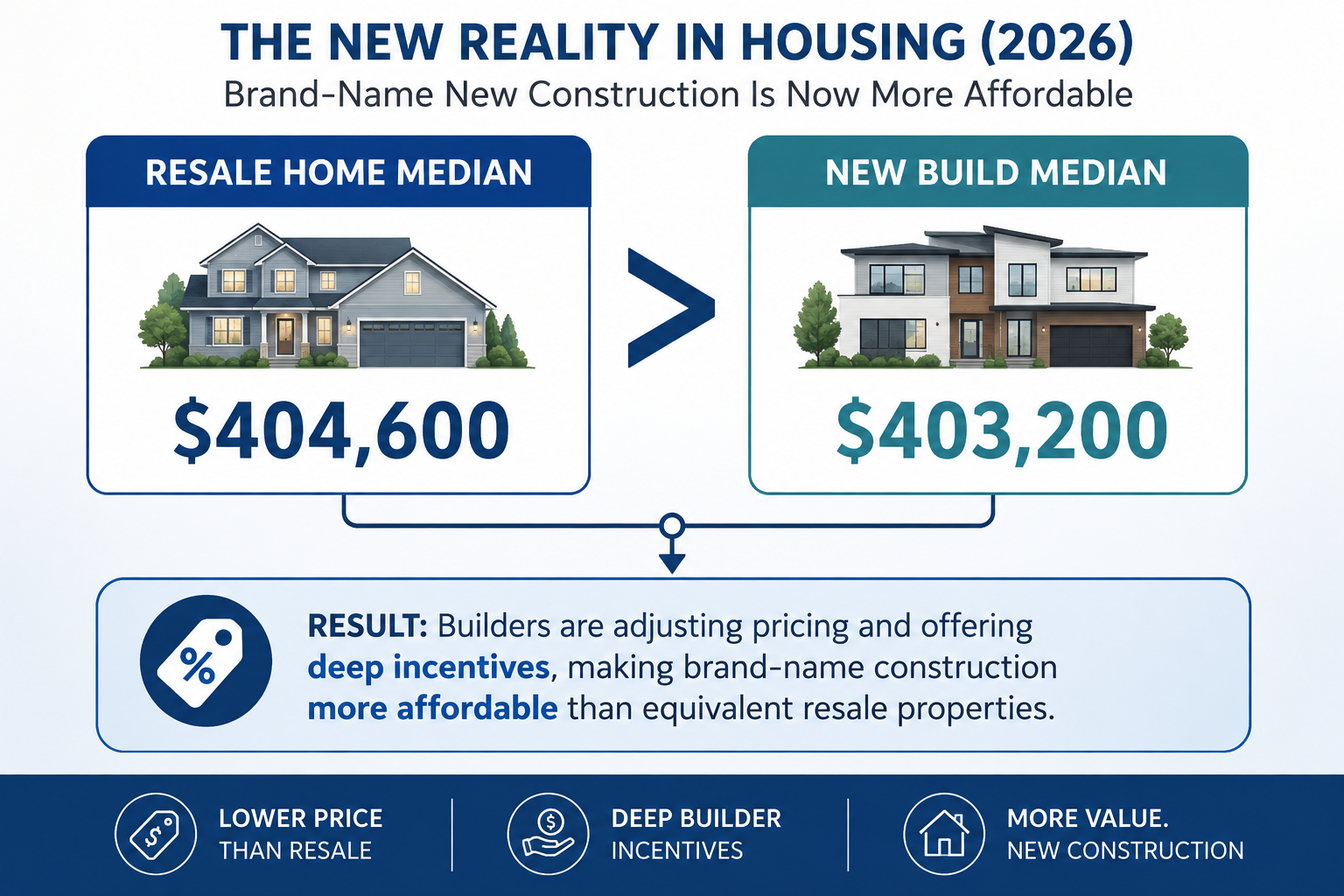
We are seeing a dynamic in mid-2026 that has only happened a few times in recent decades: the median price of a resale home is actually hovering higher than the median price of a newly built home.
For years, market observers took it as an absolute given that new construction came with a hefty luxury price tag compared to existing housing stock. Today, tactical builder decisions, sustained supply constraints in the resale sector, and shifting macroeconomic realities have completely rewritten the rules of engagement. Whether you are trying to close deals with exhausted first-time buyers or coaching sellers who are still anchored to pandemic-era pricing delusions, mastering these shifts is your ultimate cheat code for the back half of 2026.
Part I: The Resale vs. New Build Paradox — A 2026 Cheat Code for Frustrated Buyers
The Relatable Problem
Your buyers are fatigued. They are getting outpriced on resale homes in established neighborhoods, or they are walking away because sellers are still pricing their properties aggressively without offering any concessions.
Every weekend feels like Groundhog Day: multiple offers materialize on modest three-bedroom ranches, bidding wars push prices past appraisal limits, and buyers are continually asked to waive essential inspection contingencies just to stay in the running. When interest rates refuse to drop back down to historic lows, this aggressive resale dynamic pushes everyday families completely out of the market.
The Coaching Solution: Pivot to New Construction
It is time to pivot your buyers toward new construction. The old narrative that new builds are uniformly unaffordable is officially dead.
-
Leverage Builder Incentives: Builders are heavily motivated to move inventory and maintain construction velocity. Many are offering aggressive rate buy-downs, covering standard closing costs, or throwing in valuable structural upgrades and appliance packages that a traditional resale seller simply cannot compete with.
-
Expand the Search Radius: Builders are developing where the land is available and affordable. This often means looking just outside the hyper-competitive core zip codes into emerging suburban pockets or up-and-coming metro fringes. Coach your buyers on the long-term equity potential of these fast-growing neighborhoods.
-
Less Maintenance, More Peace of Mind: For buyers stretched thin by prevailing interest rates, a brand-new build means skipping the immediate "surprise" financial repairs—such as aging roofs, failing HVAC units, or outdated plumbing—that frequently come bundled with a 30-year-old resale property.
Market Data Support: New vs. Existing Home Pricing Trends
To effectively counsel your clients, you need to walk them through the hard data. The historical premium associated with new construction has flipped on its head.
| Housing Metric (2026 National Data) |
New Single-Family Home | Existing (Resale) Home | Market Implication |
|---|---|---|---|
|
National Median Sales Price |
$403,200 |
$404,600 |
Resale prices now exceed new construction due to extreme existing inventory shortages. |
|
Year-Over-Year Price Growth |
-4.7% Decreasing |
+0.6% Modest Increase |
Builders are actively moderating prices to meet affordability constraints. |
|
Pricing Volatility & Flexibility |
High Direct builder concessions |
Low Homeowners resistant to price drops |
Builders offer direct financial incentives, such as mortgage-rate buy-downs, while resale sellers rarely do. |
As tracked by industry data analyses,
Part II: Inventory is Slowly Creeping Up — Is Your Listing Presentation Ready?
The Relatable Problem
Good news and bad news for the second half of 2026: The housing market is finally seeing a modest, measurable bump in supply. Active inventory is climbing across national footprints, providing buyers with much-needed breathing room.
The bad news? If your prospective sellers think they can throw a "Coming Soon" sign in the front yard, skip professional media, and instantly attract 15 cash offers over the weekend, they are in for a rude awakening. Sellers are still anchoring their psychological expectations to the hyper-inflated pandemic boom years. As inventory slowly normalizes and buyers regain leverage, overpriced listings are sitting on the market, forcing painful, morale-crushing price reductions down the road.
The Coaching Solution: Overhauling the Listing Presentation
Your listing presentation needs a complete, modern overhaul to survive and thrive in this environment.
-
Have the Hard Pricing Conversation on Day 1: Do not "buy the listing" by inflating your comparative market analysis (CMA) just to secure a signature. Show your sellers the empirical data: homes are sitting on the market longer, and buyers are brutally sensitive to monthly debt service obligations.
-
Prep the Home Like It’s 2019: Professional staging, meticulous deep cleaning, high-end architectural photography, and aggressive curb appeal matter once again. When buyers have actual choices across multiple properties, the neglected "ugly duckling" of the neighborhood will sit indefinitely.
-
Bake Concessions into the Listing Strategy: Instead of defaulting to massive, continuous price drops after a property goes stale, coach your sellers upfront to budget for a seller-paid 2-1 mortgage rate buy-down. It frequently costs the seller less out-of-pocket than a sweeping $20,000 price cut while directly resolving the buyer's primary friction point: high monthly interest rates.
Macro Housing Inventory Context
To anchor these conversations, look at how supply is behaving on a macro scale. Total active inventory has steadily crawled upward from previous historic troughs.
As documented by economic trackers,
Part III: Deep-Dive Regional Application — The St. Louis Metro Perspective
To see how these national trends play out on the ground, look no further than the Midwest engine of the St. Louis metropolitan area. Local real estate dynamics amplify both the new construction advantage and the pressing need for sharp listing presentations.
St. Louis Market Realities
In St. Louis, active residential inventory has climbed roughly 10% year-over-year, creating a much-welcomed "exhale" for local first-time buyers who spent recent years locked out of bidding wars.
-
Localized Pricing Adjustments: The median listing price in the broader St. Louis bi-state region adjusted to approximately $290,000, representing a healthy 3.3% year-over-year cooling that restores genuine affordability.
-
Days on Market Expansion: Listings in classic neighborhoods—from Shaw and Benton Park to St. Charles County and University City—are now spending a median of 44 days on the market. This expanded window means impulsive pricing strategies fail instantly, while well-prepared, properly staged homes capture steady, serious buyer traffic.
-
The Return of Inspections: With inventory up and frantic bidding wars subsiding to under 20% of total transactions, local buyers are safely re-inserting physical home inspections and financial contingencies into their purchase agreements.
Part IV: Practical Implementation Guide for Agents and Teams
To turn these insights into immediate commission income, execute this tactical blueprint over the next fourteen days:
-
Audit Your Database for Fence-Sitters: Run a targeted email and phone campaign to buyers who gave up in 2024 or 2025. Send them the hard data proving that new construction homes are currently priced lower than equivalent resale options.
-
Schedule Builder Site Visits This Week: Drive out to active subdivision sites in your local market. Build direct relationships with onsite sales reps, discover what unadvertised August builder incentives or closing cost credits are currently active, and map those figures directly into your buyer net sheets.
-
Redesign Your Pre-Listing Packet: Insert a dedicated page into your listing presentation titled "The Danger of Pandemic Pricing in a Normalizing Market." Use local days-on-market metrics and active inventory growth stats to justify starting out at a sharp, competitive market price rather than chasing the market down with endless price reductions.
Conclusion: Acting as a Trusted Advisor
The most successful real estate professionals this month will not be order-takers who simply upload listings to the MLS and cross their fingers. They are fierce, data-backed advisors who protect buyers from overpaying for tired resale properties and protect sellers from overpricing their homes in a normalizing market. By mastering the resale-versus-new-build paradox and embracing modern inventory strategies, you position yourself as an indispensable expert in any economic climate.