How to Coach Clients Through the 2026 Housing Market
Aug 04, 2026
Written by Discount Property Investor Team
If you or your clients feel like the current housing market isn’t behaving like a normal cycle, you aren't crazy. Economists are officially calling the current US housing landscape an anomaly. We’ve been stuck in a prolonged "correction" phase, yet home prices have stubbornly refused to drop significantly on a national level.
As we head deeper into the back half of 2026, the Federal Reserve has maintained its rate pause, keeping the 30-year fixed mortgage average hovering around the mid-6% range.
Let's break down why this cycle feels completely out of orbit and, more importantly, how you can coach your clients to win in it.
The Relatable Problem: Stuck Between a Crash That Won't Come and 2022 Pricing Expectations
Every real estate agent knows the script right now. Your buyers are sitting on the sidelines, waiting for a massive market crash that history proves isn't coming. They read headlines about high interest rates and assume home values are about to plummet 20% overnight.
Meanwhile, your potential sellers are living in the past. They refuse to list their properties unless they can command the hyper-inflated, bidding-war prices of 2022. They look at their neighbors' past equity gains and take it as a personal baseline, completely ignoring the reality of today's borrowing costs.
The result? A standoff. Inventory gets locked up, transactions stall, and clients look to you—their agent—for answers. If you try to feed them standard, cookie-cutter scripts from five years ago, you'll lose their trust entirely.
The 2026 Macro Landscape: What the Data Actually Tells Us
To coach effectively, you have to anchor your conversations in current, verifiable data. The market isn't crashing, but it isn't booming either; it is stabilizing in a state of high-cost equilibrium.
According to market updates from
At the same time, inventory constraints continue to shape regional landscapes. As noted by
To visualize how key metrics like mortgage rates, inventory shifts, and buyer demand interact in this 2026 plateau, review the data graph below:
2026 US HOUSING MARKET EQUILIBRIUM
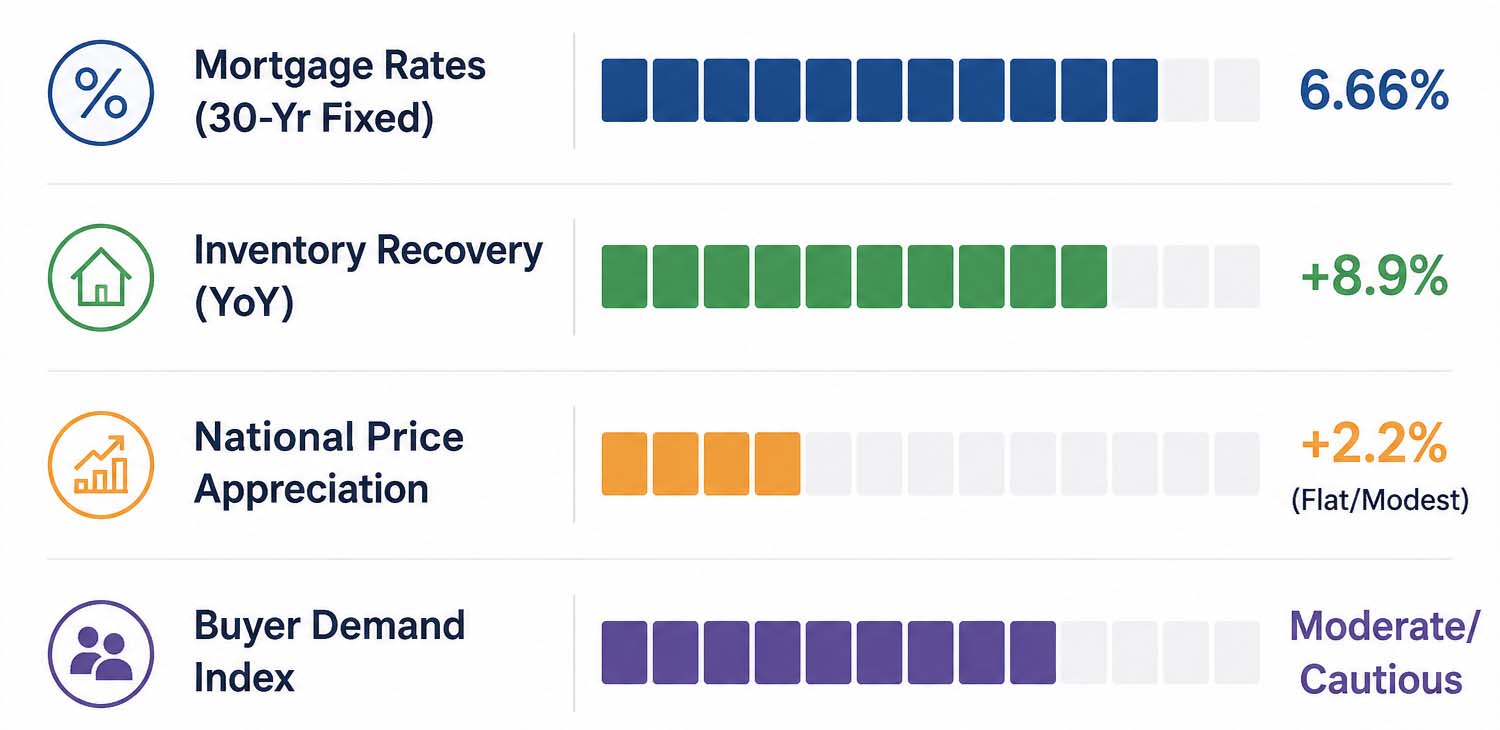
Source Data Context: Freddie Mac PMMS & Realtor.com 2026 Outlook.
Furthermore, long-term industry projections underscore this new baseline. Real estate analysis from
Step 1: Reset the "Normal" for Your Clients
The first step in coaching clients through an out-of-orbit market is shattering their illusions about what "normal" looks like.
-
For the Buyer Waiting for a Crash: Show them historical context. Explain that housing crashes are typically triggered by massive overbuilding, widespread foreclosures, or sudden spikes in distressed inventory—none of which exist today. Strict lending standards implemented over the last decade mean homeowners are sitting on historic levels of equity. Remind them: Waiting for a crash in a low-inventory, high-equity environment is like waiting for snow in July.
-
For the Seller Living in 2022: Give them a reality check wrapped in data. Show them recent local absorption rates and days-on-market metrics. Explain that 2022 was an unnatural anomaly fueled by historic emergency stimulus and sub-3% rates. Pushing past fair market value today doesn't net them more money; it simply helps their competition sell faster.
💡 Coaching Pro-Tip
Never tell a client, “The market is bad.”
Instead, reframe it: “The market isn’t bad—it’s normalized. The era of chaotic bidding wars is over, replaced by a market that rewards realism, preparation, and strategy.”
Step 2: Shift the Focus from Purchase Price to Monthly Payment
In a market where rates are hovering around 6.66%, and home prices refuse to drop, fixating on the purchase price is a trap. Most buyers calculate affordability based entirely on the sticker price of the home, which completely distorts their decision-making process.
As a high-level coach, you need to shift their paradigm to total monthly affordability.
How to Break Down the Math for Buyers:
-
Isolate the Payment Components: Break down principal, interest, taxes, insurance (PITI), and any HOA fees. Show them how minor adjustments in purchase price impact the actual monthly payment versus how a small change in their down payment or interest rate shifts the needle.
-
Introduce Strategic Financing Options: Discuss temporary buydowns or adjustable-rate products if they fit the client’s risk tolerance and timeline.
-
Remind Them About Refinancing: Educate buyers on the golden rule of modern real estate: Marry the house, date the rate. If macro conditions shift and the Federal Reserve eventually introduces deeper rate cuts down the road, today's buyers will have an opportunity to refinance. But if they wait on the sidelines for rates to drop first, they will face a flood of returning buyers, intense competition, and surging home prices.
Step 3: Weaponize the Positives—Leverage and Time
Every market cycle has an upside. When interest rates were at historic lows during the pandemic boom, buyers had purchasing power, but they lacked control. It was a chaotic, high-stress free-for-all where buyers had to waive home inspections, write offers within hours of a listing going live, and offer tens of thousands over asking price just to get a seat at the table.
Today's market completely flips that dynamic, and you need to highlight this luxury to your clients.
-
The Return of Contingencies: Buyers can finally protect themselves. Inspections, appraisals, and financing contingencies are back. They can actually take a breath, investigate the property thoroughly, and make informed financial decisions without feeling pressured into a multi-million-dollar mistake.
-
Negotiating Power: Because inventory has clawed its way back and days-on-market have expanded slightly, sellers are far more willing to negotiate. Sellers are offering repair credits, closing cost assistance, and price adjustments—concessions that were virtually unheard of a few years ago.
-
The Luxury of Thoughtful Choices: Buyers aren't competing against twenty other frantic offers on a Saturday afternoon. They can view a home twice, think about it overnight, and structure an offer that works for them.
Step 4: Overcoming Specific Client Objections in August 2026
To make this actionable for your day-to-day business, let’s look at how you handle the most common objections you will encounter this month.
Objection A: "Shouldn't I wait until next year when rates drop significantly?"
-
Your Response: "I completely understand wanting to optimize your interest rate. However, let’s look at the math of waiting. If rates drop by half a point next year, buyer demand will surge instantly. That wave of pent-up demand will drive home prices up faster than you save on the interest rate. You end up paying more for the asset to save a little on the loan. Right now, you have negotiating power and less competition. Let’s secure the house today at a negotiable price, and we can always look at refinancing when rates adjust."
Objection B: "If I sell my house now, where am I going to go? Everything is too expensive."
-
Your Response: "That’s a valid concern, but remember that you are playing in the same ecosystem on both sides of the transaction. If you sell high, you buy high—true—but your equity gives you a massive advantage. Furthermore, because inventory has stabilized, you aren't going to be forced into a temporary rental or a frantic, homeless transition. We can structure your sale with a rent-back contingency or coordinate a simultaneous closing, so your move is seamless."
Advanced Coaching Framework: The Agent's Action Plan
To ensure you aren't just talking about the market, but actually capturing business from it, execute this three-part operational blueprint this month:
-
Audit Your Database for "Stuck" Leads: Reach out to every buyer and seller who ghosted you or paused their search over the last six to twelve months. Send them a quick, non-salesy market update showing local inventory trends and concession data. Remind them that waiting hasn't saved anyone money.
-
Host a Buyer Workshop on Monthly Payment Strategies: Position yourself as the financial educator in your local market. Put together a short webinar or in-person workshop titled "How to Buy Smart in a 6.5% Market." Teach consumers how to look past headlines and focus on long-term wealth building through real estate equity.
-
Partner Up with Smart Lenders: Align yourself with mortgage professionals who specialize in creative financing solutions—such as seller-paid buydowns or assumable mortgages. When you bring a buyer a house and a creative financing path that lowers their initial payments, you become irreplaceable.
Conclusion: Clarity Wins the Market
The 2026 housing market cycle may feel like it's operating out of orbit, but confusion is your greatest competitive advantage as an agent. While amateur agents panic over headlines and wait for the old days to return, top producers are stepping up as trusted advisors.
Stop selling the illusion of crashing interest rates or wishing for 2022 prices to return. Instead, sell clarity. Show your clients the real data, help them master their monthly payments, leverage the return of buyer negotiating power, and guide them across the finish line. Agents who master this mindset won't just survive this anomalous market cycle—they will completely dominate it.