US Real Estate Market Tips 2026: How Beginners Can Profit
Feb 21, 2026
Written by David Dodge
"2026 is a pivotal year for real estate — and beginners who move now will thank themselves later."
The US real estate market has undergone a dramatic transformation over the past three years. After the historic rate hikes of 2022 and 2023, a period of cautious stabilization in 2024, and early signs of recovery in 2025, the market entering 2026 looks fundamentally different from the frenzied, low-rate era that preceded it. Prices in many markets have recalibrated. Inventory is slowly returning. And investor activity — far from drying up — has actually intensified as savvy players adapt their strategies to the new environment.
For a first-time real estate investor, this might sound intimidating. But here's the truth: the best time to enter any market is when others are unsure. The fundamentals of real estate — land scarcity, population growth, rental demand, and long-term appreciation — haven't changed. What has changed is the playbook. And in this guide, you'll get the updated version.
Whether you're thinking about your first rental property, exploring house hacking, or simply trying to understand where the market is headed, this blog breaks it all down. By the end, you'll have a clear picture of where the opportunities are, what strategies actually work in 2026, and why waiting another year will likely cost you more than you think.
The State of the US Real Estate Market in 2026
Interest Rate Trends and What They Mean for Buyers
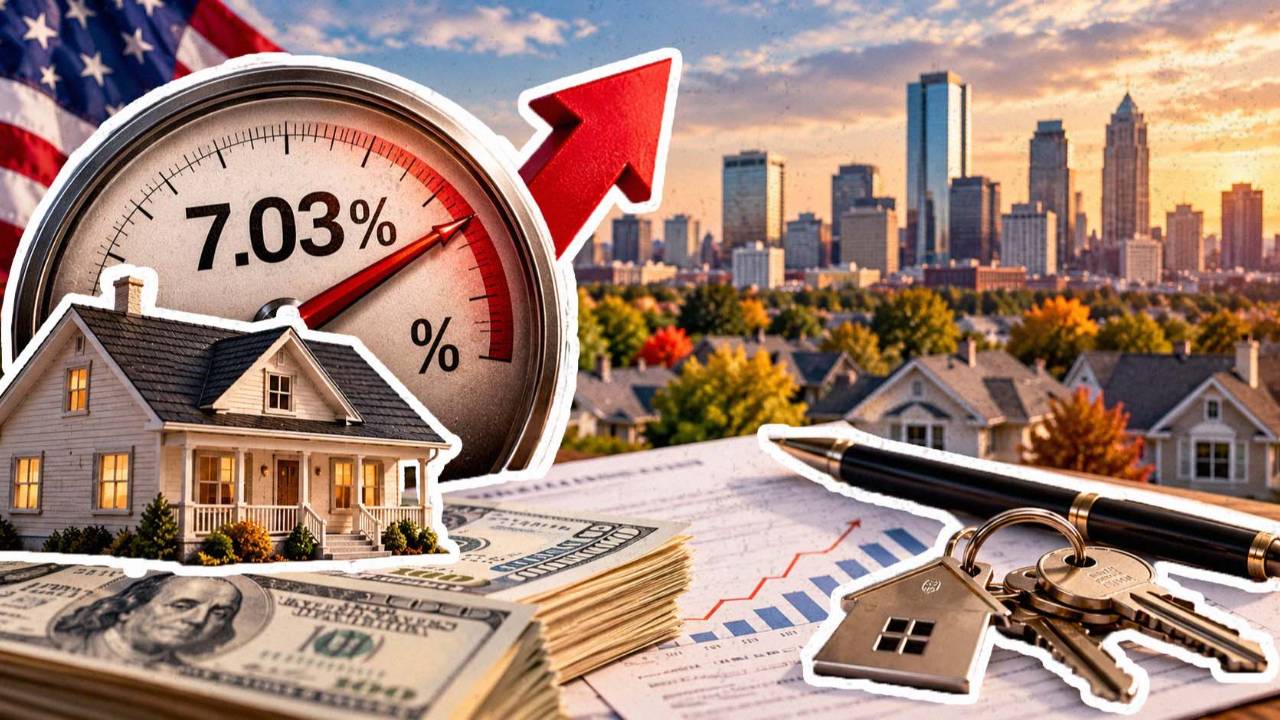
After reaching a peak of over 8% for a 30-year fixed mortgage in late 2023 — the highest level in over two decades — rates have been on a gradual downward path. According to data from Freddie Mac's Primary Mortgage Market Survey, 30-year fixed mortgage rates have settled into the mid-to-upper 6% range heading into 2026, with some forecasters from the Mortgage Bankers Association (MBA) projecting further easing toward 6.0%–6.5% by mid-year, depending on inflation data.

Source: Freddie Mac Primary Mortgage Market Survey · Federal Reserve H.15 Release. 2026 reflects early-year estimates.
This matters enormously for buyers. While rates are still higher than the 3%–4% era that defined 2020–2021, they are no longer at panic-inducing highs. More importantly, many buyers are beginning to accept that waiting for a return to 3% rates is an unrealistic strategy. As a result, purchase applications have been recovering, and both owner-occupants and investors are coming back to the table.
For beginners, the key takeaway is this: the rate environment requires smarter deal structuring, not sitting on the sidelines.
Inventory Levels Across Key US Regions
One of the defining features of the 2022–2024 market was extreme inventory shortage. That picture is gradually improving. According to the National Association of Realtors (NAR), existing home inventory rose to approximately 1.37 million units in late 2024 — a significant jump from the historic lows seen in 2022, but still well below the 2–2.5 million units considered a balanced market.
Regionally, inventory recovery has been uneven. Sun Belt states like Texas and Florida — which saw explosive building activity during the pandemic — have seen meaningful increases in supply, particularly in the new construction segment. Markets like Austin, TX have actually shifted to a buyer's market in certain price ranges. Meanwhile, the Northeast and Pacific Coast continue to face acute supply shortages, keeping pressure on prices in cities like New York, Boston, and Seattle.
For investors, this regional divergence is a feature, not a bug. The right market matters enormously in 2026.
Rental Demand Trends Heading Through 2026
44M
Renter Households in the United States The US homeownership rate stands at approximately 65.6% according to the US Census Bureau , meaning roughly 44 million households are renters — a structurally large and stable demand base for landlords.
That renter base is supported by several durable trends: student debt burdens, delayed family formation among millennials and Gen Z, and affordability barriers to homeownership in high-cost markets. According to Harvard's Joint Center for Housing Studies, the US faces a structural housing deficit of between 1.5 and 3.8 million units, depending on the methodology used. That undersupply doesn't just support prices — it keeps vacancy rates low and gives landlords pricing power on rents.
The national average rent for a one-bedroom apartment hovered around $1,525 per month in early 2025 according to Apartment List, and while rent growth has moderated from its pandemic peaks, it remains positive in most metro areas. For beginner investors, this means a rental property purchased today has durable demand behind it.
Why Investors Are More Active Than Ever Despite Challenges
It might seem counterintuitive, but institutional and individual investor activity in US real estate has not slowed proportionally with rate increases. Large players like Blackstone, Invitation Homes, and various private equity funds have continued to accumulate residential and commercial assets. According to CoreLogic, investors accounted for approximately 26% of single-family home purchases in 2024 — a historically high share.
Individual investors and small landlords are adapting by shifting to different deal structures: seller financing, subject-to mortgages, DSCR loans, and syndications have all become more popular. The data-driven investor of 2026 isn't waiting for perfect conditions — they're structuring deals to work in the current environment.
Where the Best Opportunities Are for Beginners in 2026
Secondary and Emerging Markets: Sun Belt, Midwest, and Southeast
For beginner investors, the most accessible and highest-upside markets in 2026 are not the gateway cities. Major metros like Los Angeles, San Francisco, New York, and Chicago present extreme price-to-rent ratios that make cash flow nearly impossible without creative structuring. Instead, the most compelling opportunities are in secondary and emerging markets.
Sun Belt Markets
Cities like Birmingham, AL; Memphis, TN; Huntsville, AL; and Greenville, SC offer median home prices in the $150,000–$250,000 range with rent-to-price ratios that can support positive cash flow even at 2026 interest rates. According to U-Haul's annual migration report, Sun Belt and Southeast destinations dominated the list of top move-in cities for the third consecutive year in 2024.
Midwest Markets
Columbus, OH; Indianapolis, IN; Cleveland, OH; and Kansas City, MO represent a different set of opportunities. These markets tend to have lower entry points, stable employment bases, and strong rental demand from working-class and middle-income renters. In cities like Cleveland, it is still possible to purchase a rental property for under $100,000 and generate 10%+ gross rental yields.
Southeast Emerging Markets
Markets like Chattanooga, TN; Macon, GA; and Spartanburg, SC are attracting investor attention for their growing job markets, relatively low cost of living, and still-affordable real estate prices. These are the markets where beginners can often get into their first investment property without needing a massive capital base.
The underlying principle for 2026 is to follow population growth and jobs, not hype.

Source: National Association of Realtors — Metro Area Home Prices & Zillow Research Data (Q3 2024).
House Hacking: The Smartest Beginner Strategy in 2026
If there is one strategy tailor-made for the 2026 market environment, it's house hacking. House hacking means purchasing a multi-unit property (duplex, triplex, or fourplex), living in one unit, and renting out the others to offset or eliminate your housing costs. It can also work with single-family homes by renting out spare bedrooms.
The financial advantages are significant. Because you're owner-occupying the property, you qualify for conventional financing with as little as 3.5% down (FHA) or 5% down (conventional), versus the 20–25% typically required for investment properties. This dramatically lowers the barrier to entry. If you purchase a duplex for $300,000 and your tenant's rent covers $1,200 of your $1,800 mortgage payment, you're effectively living for $600 per month while building equity and owning an appreciating asset.
In 2026, with rents remaining strong and owner-occupant financing advantages intact, house hacking is arguably the single best entry point for a beginner investor with limited capital.
Short-Term vs. Long-Term Rentals in Today's Climate
The short-term rental (STR) market — dominated by platforms like Airbnb and VRBO — experienced extraordinary growth from 2020 to 2022 and has since entered a normalization phase. Supply of STR listings has grown significantly in many markets, compressing daily rates and occupancy levels. Additionally, many municipalities across the US have introduced new licensing requirements, zoning restrictions, and outright bans on short-term rentals.
This doesn't mean STRs are dead — but it does mean you need to do more homework. Markets with genuine tourism demand, limited STR supply, and favorable local regulations (such as Great Smoky Mountains–adjacent towns in Tennessee, or certain coastal markets in the Carolinas) can still produce exceptional returns. But going into STRs blindly in an oversaturated market is a recipe for underperformance.
Long-term rentals, by contrast, offer predictability, lower management intensity, and stable demand. For most beginners in 2026, a long-term rental strategy is the lower-risk starting point.
The BRRRR Strategy Adapted for the 2026 Rate Environment
The BRRRR strategy — Buy, Rehab, Rent, Refinance, Repeat — has been the engine of wealth creation for small-to-mid-size investors for decades. In the low-rate era, refinancing at 3%–4% after a rehab was almost always a slam dunk. In 2026, with rates in the 6%–7% range, the strategy requires more precision.
Buy deeper: With higher financing costs, the acquisition price needs to be lower relative to after-repair value (ARV). Look for properties at 60%–65% of ARV rather than the 70%–75% that was sufficient in lower-rate environments.
Optimize rehab scope: Focus rehab dollars on items that directly support rent increases — kitchens, bathrooms, curb appeal — rather than cosmetic upgrades that don't move the rent needle.
Use DSCR loans for the refinance: Debt Service Coverage Ratio (DSCR) loans have become the tool of choice for 2026 investors because they qualify based on property cash flow rather than personal income, making them ideal for scaling a portfolio without running into conventional loan limits.
5 Tips to Navigate the 2026 US Market as a Beginner
- Tip 01: Focus on Cash Flow Over Appreciation in 2026
- In the 2020–2022 era, investors could get away with buying properties with thin or negative cash flow because appreciation bailed everyone out. That strategy carries significantly more risk in 2026. With higher financing costs eating into margins, a property that doesn't cash flow from day one can become a financial drain quickly. Beginner investors should target properties that generate positive cash flow after accounting for mortgage, taxes, insurance, property management (typically 8–10% of gross rents), maintenance reserves (5–10%), and vacancy (5–8%). A common benchmark is the 1% rule — where the monthly rent equals at least 1% of the purchase price. Cash flow is your protection against vacancies, unexpected repairs, and economic downturns. In 2026, make it your north star.
- Tip 02: Explore Creative Financing — Seller Finance, Subject-To, DSCR
- One of the most empowering mindset shifts a beginner can make in 2026 is to recognize that bank financing isn't the only path into real estate. Seller financing is an arrangement where the seller acts as the lender — often at lower rates and with flexible terms, and is frequently available on properties held free and clear by motivated sellers. Subject-to financing involves taking ownership of a property subject to the existing mortgage, allowing you to acquire properties with the seller's existing low-rate financing in place. DSCR loans qualify borrowers based on the property's income rather than W-2 income or tax returns — ideal for self-employed investors or those building a portfolio.
- Mastering even one of these tools can open doors that conventional financing keeps closed.
- Tip 03: Invest in Education Before Spending on Properties
- This tip sounds obvious, but it's violated constantly by beginners who are eager to jump in. Before writing your first offer, commit to understanding: how to analyze rental property cash flow, how local landlord-tenant laws work in your target market, what due diligence looks like on a purchase, and how property management works. Resources like BiggerPockets and the US Department of Housing and Urban Development's (HUD) educational materials are excellent starting points. The ROI on education in real estate is extraordinary — a single mistake avoided on a $200,000 property can save more than an entire year's worth of investment returns.
- Tip 04: Network with Local and National Investors Actively
- Real estate is a people business. Some of the best deals in 2026 never hit the MLS — they're traded between investors who know each other. As of 2025, there are over 1,000 REIA chapters across the US according to the National Real Estate Investors Association — all free or low-cost to attend, connecting you with wholesalers, experienced investors, lenders, and property managers in your market. Online communities like BiggerPockets, with over 3 million members, connect investors across markets and deal types. Invest in relationships as deliberately as you invest in properties.
- Tip 05: Stay Consistent — Real Estate Rewards Patience More Than Ever
- Every market cycle in US history has been followed by a recovery that rewarded the investors who stayed the course. The investors who bought during the post-2008 dislocation and held through the 2010s built extraordinary wealth. In 2026, the investors who remain consistent — who continue to analyze deals, build relationships, and take action even when the market feels uncertain — will be the ones looking back in 2030 with portfolios they're proud of. Set a clear goal: one property this year. Analyze 50 deals to find it. Underwrite conservatively. Buy it right. Then repeat. Compounding in real estate is slow at first and then breathtaking — but only for those who stay in the game.
Why 2026 is Still a Great Time to Start Investing
Historical Data: Real Estate Always Recovers and Rewards Patience
According to the Federal Reserve's Flow of Funds report, real estate represents the largest single component of household wealth in America, totaling over $45 trillion in residential real estate value as of 2024. The S&P/Case-Shiller US National Home Price Index has shown that national home prices have increased in every rolling 10-year period on record — including periods that encompassed recessions, financial crises, and rate spikes.
Even during the 2008–2012 housing crisis — the worst downturn in modern US real estate history — investors who purchased at or near the bottom of that market and held for 10 years saw average appreciation exceeding 80% nationally, with some Sun Belt and coastal markets doubling or more.
The question for the 2026 investor is not "is real estate risky?" but rather "do I want to be sitting on the sidelines in 2030 wishing I had started four years earlier?"
The Real Cost of Waiting Another Year vs. Starting Now
The instinct to wait for "better conditions" is one of the most expensive habits in investing. Consider a simple scenario: a beginner purchases a duplex in Indianapolis for $220,000 in early 2026. They put 5% down via an FHA loan, house-hack the property, and their tenant covers 60% of their mortgage payment. Over the next four years — even assuming modest 3% annual appreciation — that property's value grows to approximately $247,000, and they've built equity through both appreciation and loan paydown.
According to the Urban Land Institute, the cost of delayed homeownership or investment purchase — even in modest appreciation environments — typically amounts to tens of thousands of dollars in foregone equity over a five-year horizon. Time in the market, not timing the market.
How Beginners Who Start in 2026 Will Be Ahead by 2029–2030
Here's a forward-looking picture worth holding onto: if you purchase your first investment property in 2026, by 2029–2030, you will have accumulated 3–4 years of equity paydown. Even at 6.5% on a $200,000 loan, you'll have paid down approximately $12,000–$15,000 in principal in the first four years. You'll have benefited from appreciation — historically 3%–5% annually — adding another $15,000–$30,000 in value. You'll have collected rental income that offsets or eliminates your housing costs throughout that period. And you'll have the experience, network, and confidence to pursue your second and third properties.
The Federal Reserve Bank of Atlanta's research notes that buyers who purchase and hold for at least five years nearly universally outperform renters in wealth building. Starting in 2026 means you're positioned to capture the inevitable next phase of recovery and growth.
The Bottom Line
The 2026 US real estate market is not a bubble about to burst, and it's not a golden age of easy returns. It's a mature, recalibrated market that rewards investors who approach it with the right knowledge, the right strategy, and the right mindset.
Interest rates have stabilized and are trending lower. Rental demand remains structurally strong. Secondary and emerging markets offer real cash flow opportunities. Creative financing strategies open doors that conventional mortgages can't. And the historical record of US real estate — across every rate environment, every recession, every period of uncertainty — tells one consistent story: the patient, educated investor wins.
You don't need perfect conditions to start. You need the right foundation. If 2026 is the year you commit to your first investment property, the resources and community you need are available. The market is ready. The opportunity is real.
The only question is: are you ready to move?